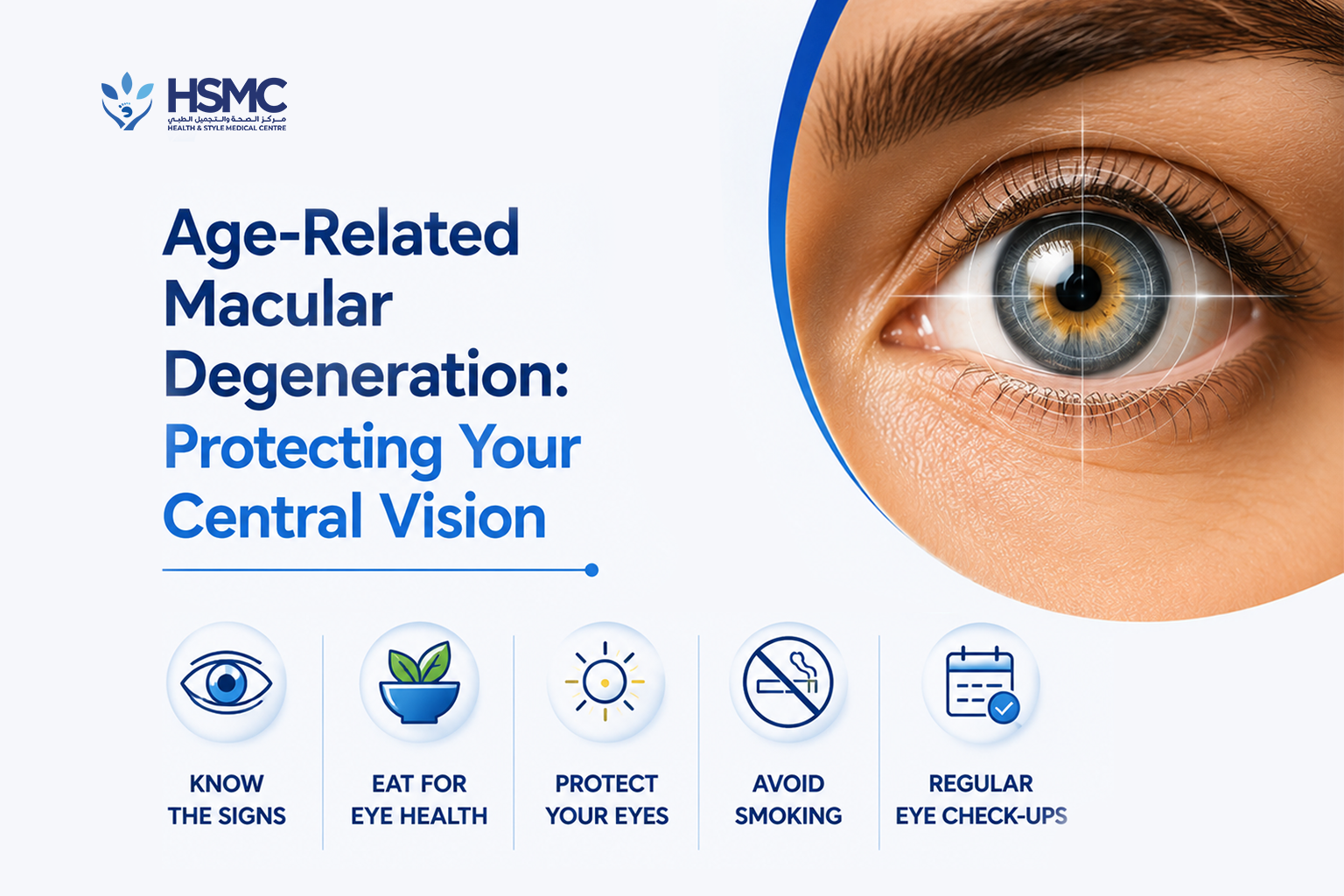
Age-related macular degeneration, or AMD, affects the macula, the small central part of the retina responsible for the sharp, detailed vision you use to read, drive and recognise faces. It is a leading cause of vision loss in older adults. While it does not usually cause complete blindness, it can make everyday tasks difficult, so early detection and good habits matter.
Early signs of AMD
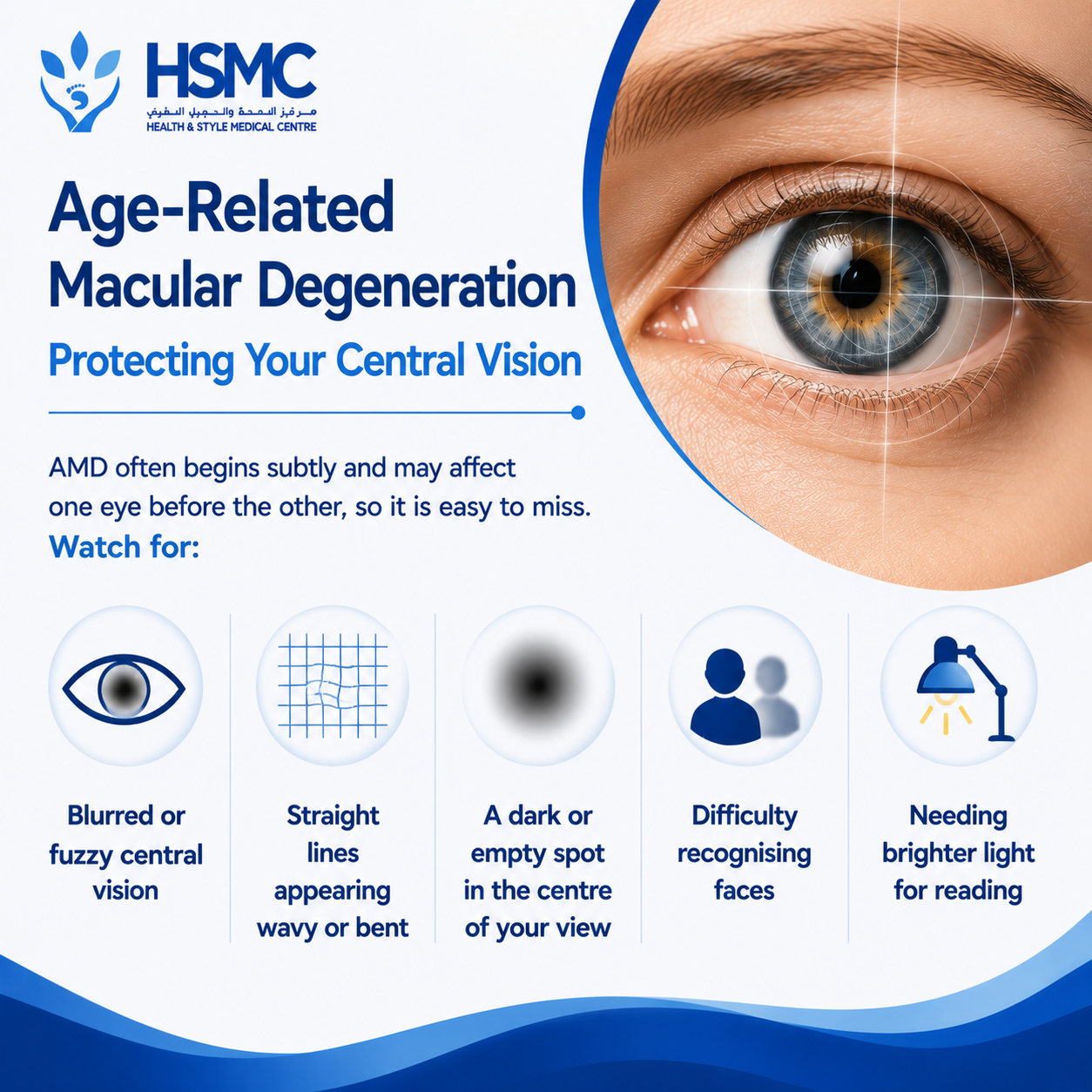
AMD often begins subtly and may affect one eye before the other, so it is easy to miss. Watch for:
- Blurred or fuzzy central vision.
- Straight lines appearing wavy or bent.
- A dark or empty spot in the centre of your view.
- Difficulty recognising faces.
- Needing brighter light for reading.
Who is at risk
The biggest risk factor is age, particularly after 60. Other factors include a family history of AMD, smoking, high blood pressure, and a diet low in leafy green vegetables and fish. Smoking is one of the few risk factors you can change, and stopping significantly lowers your risk.
Protecting your vision
There is no cure for the most common form, but progression can often be slowed. A diet rich in leafy greens, colourful vegetables and fish, not smoking, controlling blood pressure, and wearing sunglasses all help. For certain types of AMD, eye injections can preserve or even improve vision. Regular eye exams allow your ophthalmologist to catch changes early when treatment is most effective.