

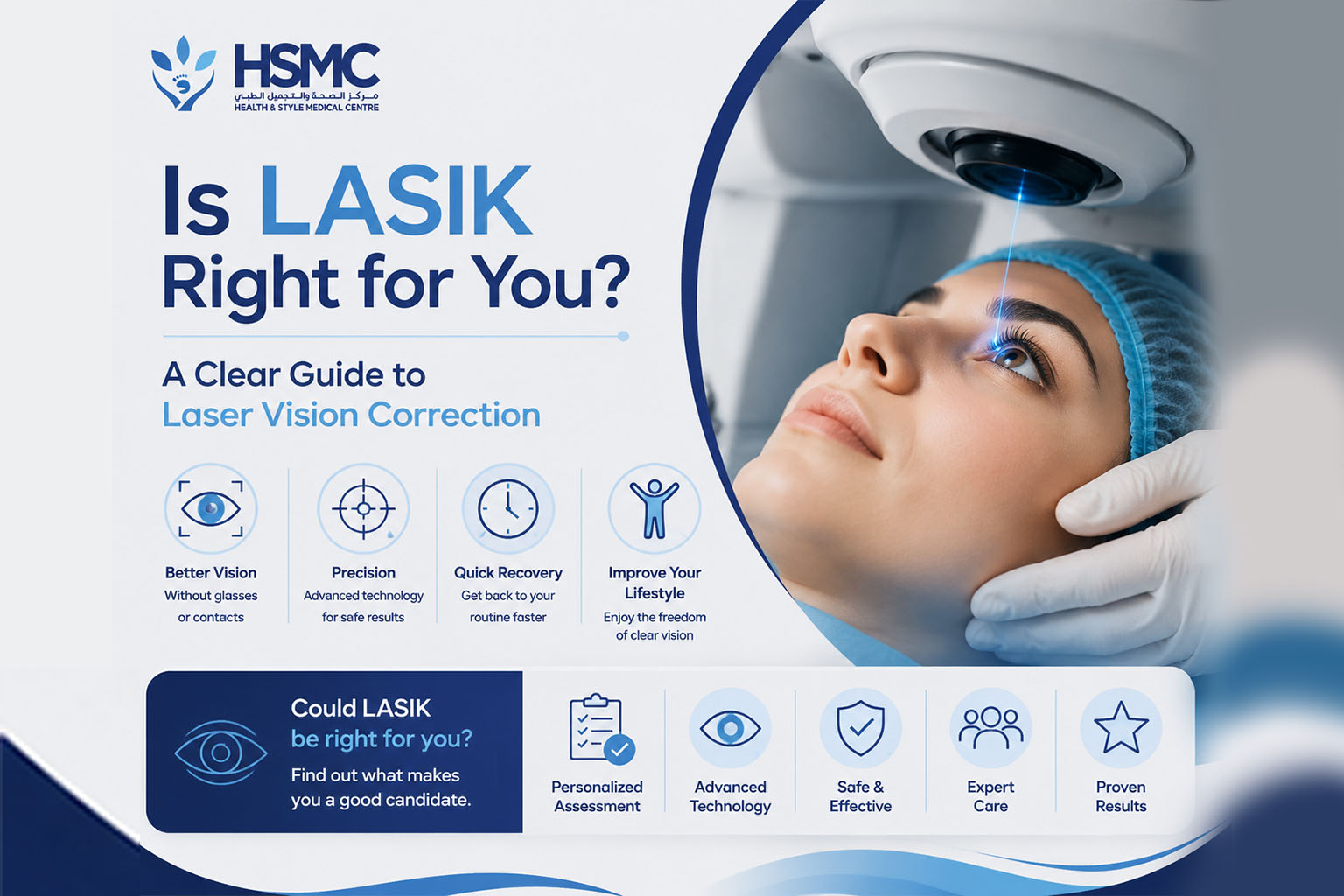
For many people who are tired of glasses and contact lenses, laser vision correction offers a chance at lasting freedom. LASIK is the best known of these procedures, and it has helped millions of people see clearly without daily corrective lenses. The key to a good outcome is a careful assessment to confirm you are a suitable candidate.
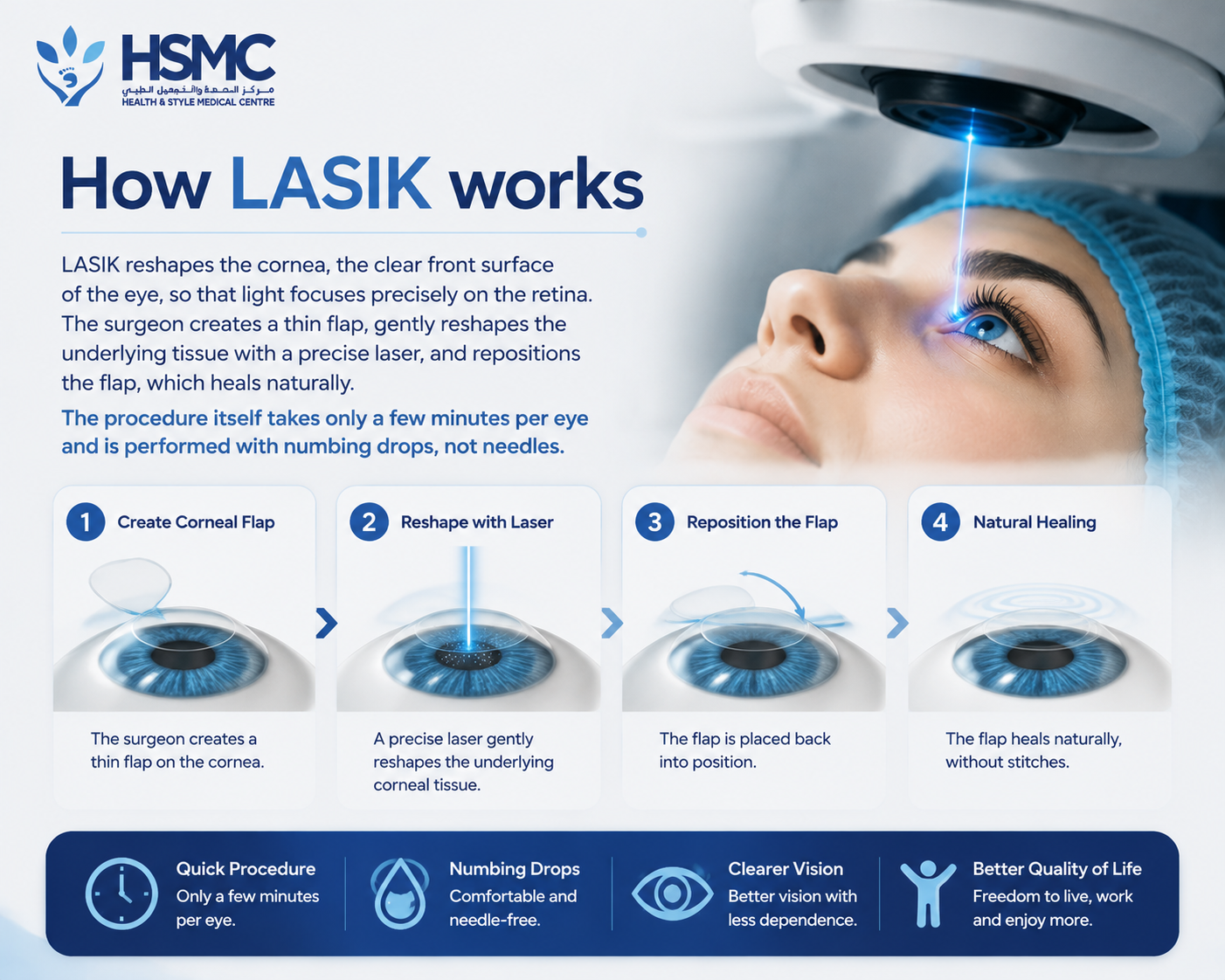
How LASIK works
LASIK reshapes the cornea, the clear front surface of the eye, so that light focuses precisely on the retina. The surgeon creates a thin flap, gently reshapes the underlying tissue with a precise laser, and repositions the flap, which heals naturally. The procedure itself takes only a few minutes per eye and is performed with numbing drops, not needles.
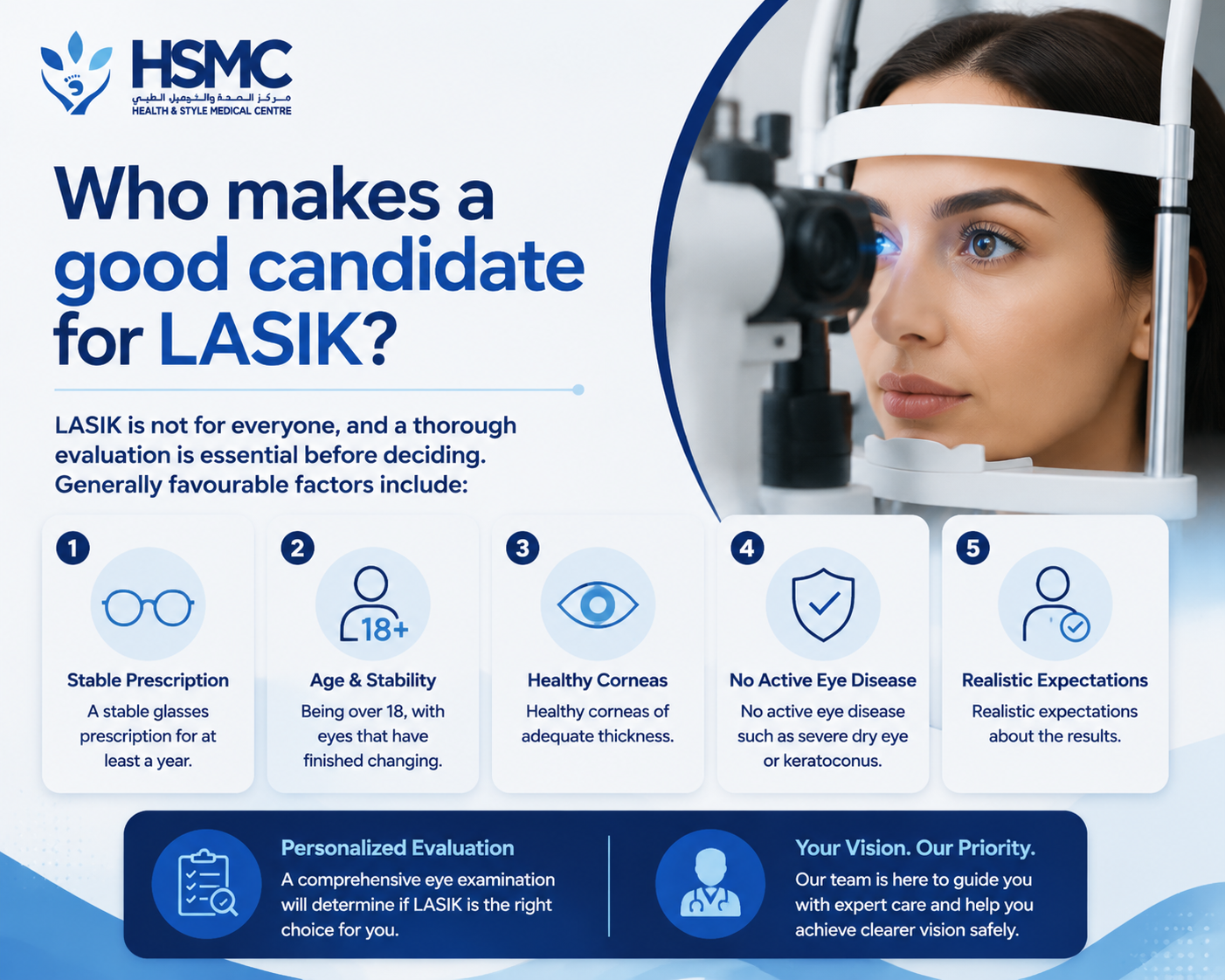
Who makes a good candidate
LASIK is not for everyone, and a thorough evaluation is essential before deciding. Generally favourable factors include:
- A stable glasses prescription for at least a year.
- Being over 18, with eyes that have finished changing.
- Healthy corneas of adequate thickness.
- No active eye disease such as severe dry eye or keratoconus.
- Realistic expectations about the results.
What to expect
Most people notice clearer vision within a day or two, though some dryness or glare can occur during healing and usually settles. Not everyone is suited to LASIK, and alternative laser procedures may be a better fit depending on your corneal thickness and prescription. A detailed consultation is the only way to know which option, if any, is right for you.