
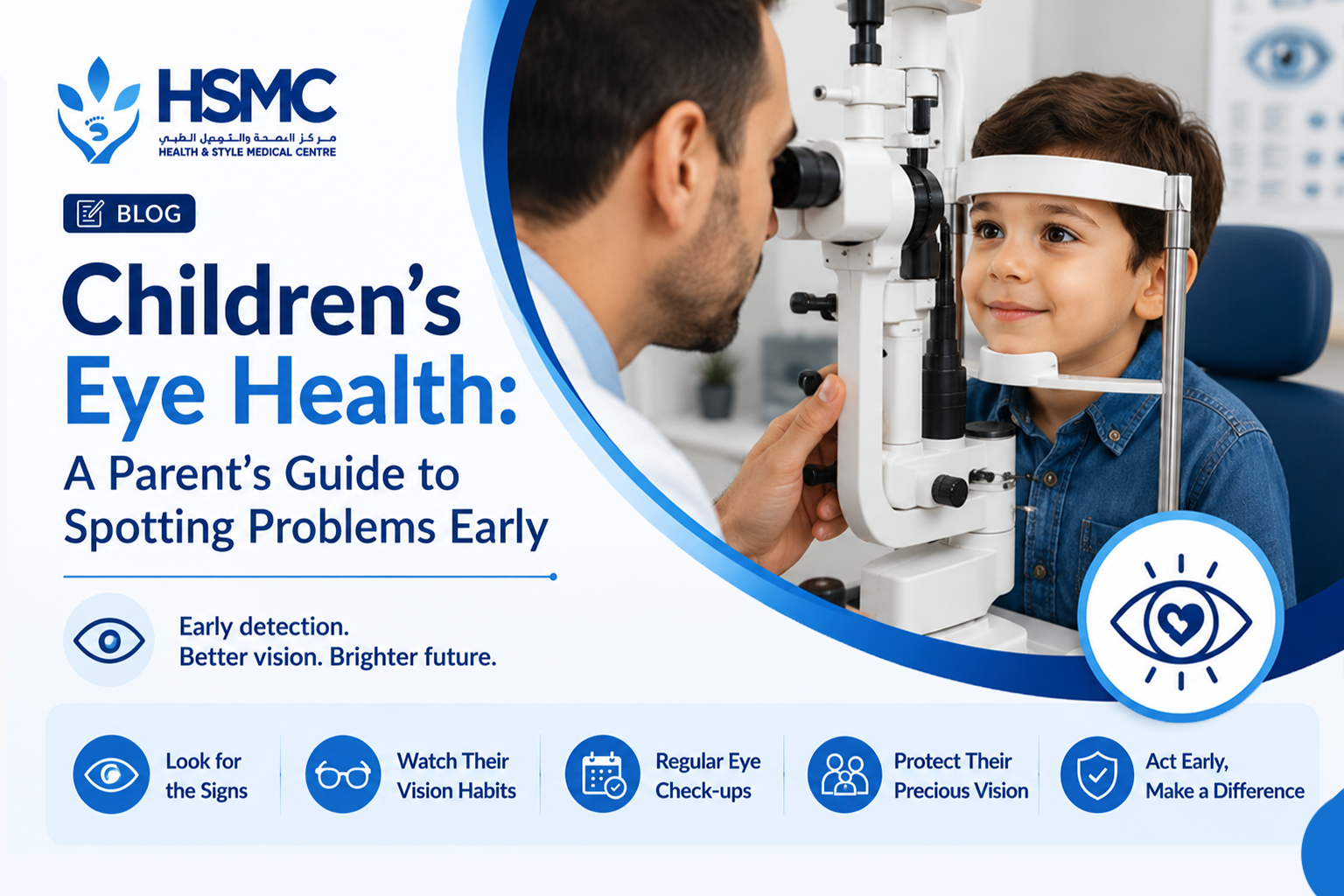
Good vision is essential for a child’s learning, play and development, yet children rarely complain about poor sight because they assume everyone sees the way they do. That is why parents and regular eye checks are so important. Catching a vision problem early gives your child the best chance of clear, comfortable sight for life.
Signs your child may have a vision problem
Children often show, rather than tell. Watch for these everyday clues:
- Sitting very close to the television or holding books close.
- Squinting, tilting the head, or covering one eye.
- Frequent eye rubbing, blinking, or headaches.
- Difficulty concentrating or losing place when reading.
- An eye that turns in or out, or eyes that do not seem to work together.
When to have your child’s eyes checked
A child’s eyes should be checked in infancy, again before starting school, and then at regular intervals. Any time you notice a concern, an earlier visit is wise. Some conditions, such as a lazy eye, respond best to treatment when caught in the early years.
Healthy habits for young eyes
Encourage plenty of outdoor play, which research links to lower rates of myopia, and balance screen time with breaks. Make sure your child has good lighting for reading and homework, and protect their eyes from the sun. A simple, child-friendly eye exam can reassure you that their vision is developing well.