

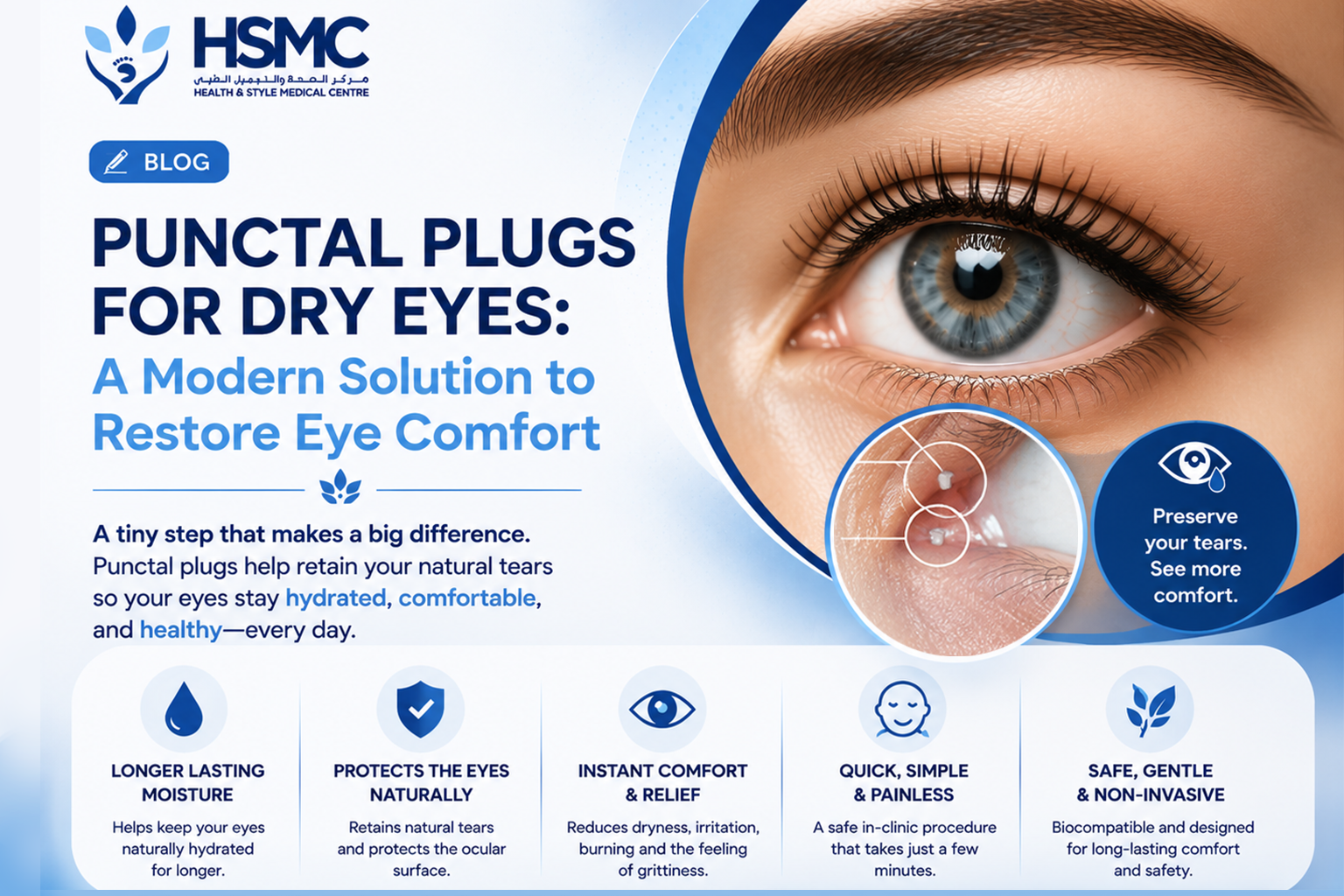
Dry eyes are one of the most common eye conditions affecting people of all ages. Many individuals experience symptoms such as burning, irritation, redness, blurred vision, or the feeling of having something stuck in the eye. While occasional dryness may be temporary, chronic dry eye disease can significantly affect daily activities such as reading, working on digital screens, driving, or wearing contact lenses.
At Health & Style Medical Centre, our Ophthalmology Department, led by Dr. Shobhana, provides advanced assessment and personalized treatment options for patients suffering from dry eye symptoms, including punctal plug therapy for suitable cases.
What Is Dry Eye Disease?
Dry Eye Disease (DED) occurs when the eyes cannot maintain a healthy tear film. Tears are essential for:
- Keeping the eye surface smooth and comfortable
- Protecting against irritation and infection
- Providing clear vision
- Nourishing the cornea (the transparent front layer of the eye)
A healthy tear film consists of three main components:
- Oil layer (lipid layer) – Prevents tears from evaporating too quickly
- Water layer (aqueous layer) – Provides hydration and nutrients
- Mucus layer – Helps tears spread evenly across the eye surface
When tear production decreases or tears evaporate too quickly, the eye surface becomes dry and irritated.
Common Symptoms of Dry Eyes
Dry eye symptoms can vary from mild discomfort to significant irritation. Common symptoms include:
- Burning or stinging sensation
- Red or irritated eyes
- Feeling of sand or grit in the eyes
- Excessive watering (watery eyes can occur as a response to dryness)
- Blurred or fluctuating vision
- Eye fatigue, especially after screen use
- Sensitivity to light
- Difficulty wearing contact lenses
If left untreated, chronic dry eye may affect the quality of the tear film and cause damage to the eye surface.
What Causes Dry Eyes?
Several factors can contribute to dry eye disease, including:
Age-related changes
Tear production naturally decreases with age, making dry eyes more common in older adults.
Prolonged screen use
Extended computer, smartphone, and tablet use reduces blinking frequency, increasing tear evaporation.
Environmental factors
Dry climates, air conditioning, wind, and dust can worsen symptoms.
Medical conditions
Certain conditions may increase the risk of dry eyes, including:
- Autoimmune diseases
- Diabetes
- Thyroid disorders
- Eyelid disorders
Medications
Some medications may contribute to dryness, including certain:
- Antihistamines
- Blood pressure medications
- Antidepressants
- Hormonal treatments
Eye procedures
Some patients may experience dry eyes after certain eye surgeries, including refractive procedures.
What Are Punctal Plugs?
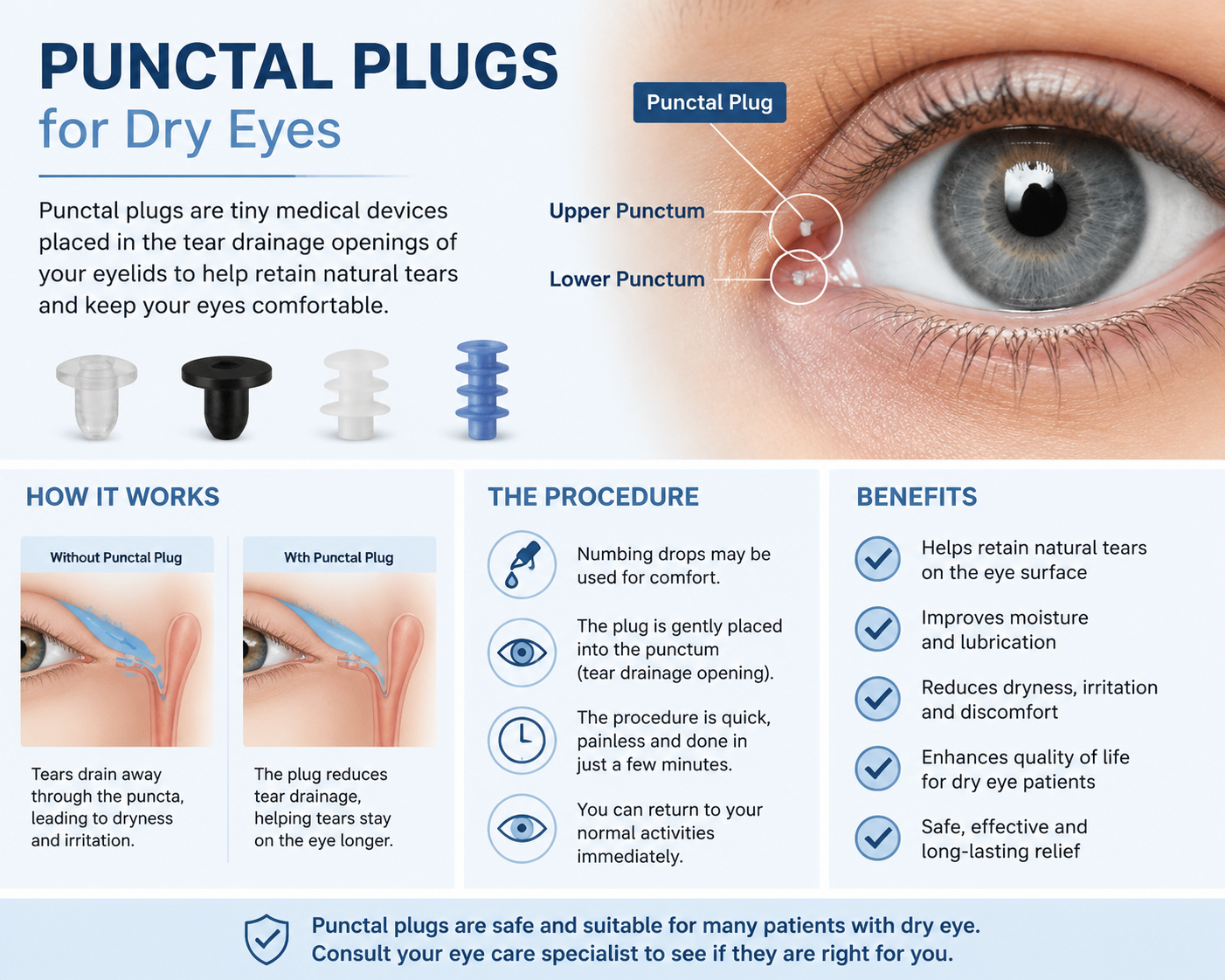
Punctal plugs are tiny medical devices designed to treat dry eyes by reducing tear drainage.
Normally, tears produced by the eye drain through small openings called puncta, located at the inner corners of the upper and lower eyelids. When tears drain too quickly, the eye surface may become dry.
Punctal plugs are inserted into these small drainage openings to help retain natural tears on the eye surface for a longer period.
How Do Punctal Plugs Help Dry Eyes?
By partially blocking tear drainage, punctal plugs can:
✅ Keep natural tears on the eye surface longer
✅ Improve moisture and lubrication
✅ Reduce dryness-related irritation
✅ Enhance comfort during daily activities
✅ Reduce dependence on frequent artificial tear use in some patients
They do not increase tear production; instead, they help preserve the tears your eyes already produce.
What Happens During Punctal Plug Placement?
The procedure is simple and usually takes only a few minutes.
Step 1: Eye assessment
An ophthalmologist evaluates your symptoms, tear production, and eye surface health to determine whether punctal plugs are appropriate.
Step 2: Comfort preparation
In some cases, numbing eye drops may be used to ensure patient comfort.
Step 3: Plug insertion
The tiny plug is gently placed into the tear drainage opening of the eyelid.
Step 4: Follow-up
Your ophthalmologist monitors your response and checks that the plugs are functioning properly.
Most patients return to normal activities immediately after the procedure
Are Punctal Plugs Safe?
Punctal plugs are considered a safe treatment option for many patients with moderate to severe dry eye disease.
Possible side effects are uncommon but may include:
- Temporary awareness of the plug
- Mild irritation
- Increased tearing
- Plug displacement (rare)
Your ophthalmologist will assess your eye condition and recommend whether this treatment is suitable for you.
Who May Benefit from Punctal Plugs?
Punctal plugs may be recommended for patients who:
- Have persistent dry eye symptoms despite using lubricating eye drops
- Produce tears but lose them too quickly
- Experience discomfort affecting daily activities
- Have moderate to severe dry eye disease
- Need additional support alongside other treatments
They are not suitable for every patient, and a detailed eye examination is essential before treatment.
Protect Your Eye Comfort with Expert Care
Dry eyes are more than just temporary discomfort. Persistent symptoms may affect your vision, productivity, and quality of life. Early assessment can help identify the cause and provide effective treatment options.
At Health & Style Medical Centre, Dr. Shobhana and the Ophthalmology Department offer comprehensive evaluation and advanced solutions, including punctal plugs, to help patients achieve healthier, more comfortable eyes.
If you experience ongoing dry eye symptoms, schedule an ophthalmology consultation and discover the right treatment option for your eyes.