Hijama is generally safe when done properly, but not for everyone. Learn the precautions and who should avoid cupping
When performed correctly, hijama is generally well tolerated, but like any therapy it carries precautions and is not suitable for everyone. At Health & Style Medical Center, every session begins with a short health check precisely so that we can keep you safe. Knowing the cautions in advance helps you make an informed choice.
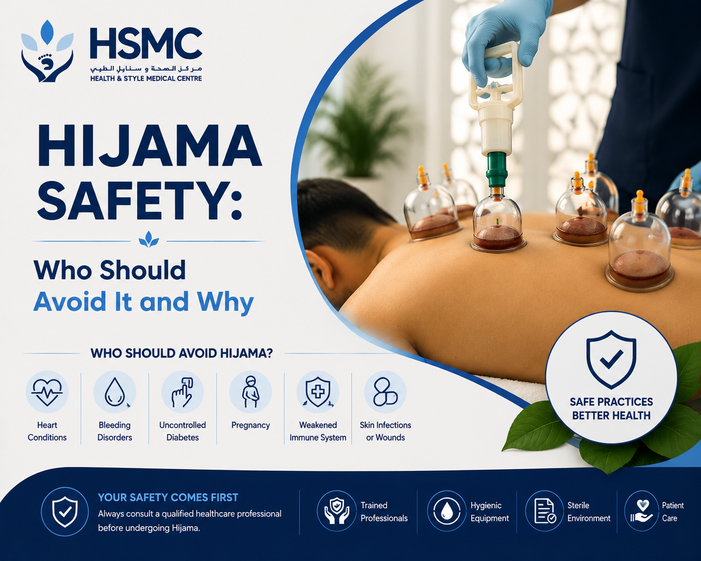
Who should be cautious or avoid it
Hijama, especially wet cupping, may not be appropriate if you:
- Take blood-thinning medication or have a bleeding disorder.
- Have anaemia or are significantly run down.
- Are pregnant, where extra caution and medical advice are needed.
- Have a skin infection, wound or inflammation at the cupping site.
- Have poorly controlled diabetes or a serious chronic illness.
Normal effects versus warning signs
Temporary circular marks, mild tenderness and slight tiredness are normal and fade within days. However, spreading redness, increasing pain, fever or any sign of infection after a session should prompt medical attention.
How to keep it safe
The most important safeguard is where and by whom it is done. A licensed centre uses sterile, single-use instruments, follows strict hygiene, and screens you beforehand. This is the single biggest difference between safe practice and unnecessary risk.
Your safety comes first. Book hijama with our trained team at Health & Style Medical Center.

- Tags:
- cupping therapy