

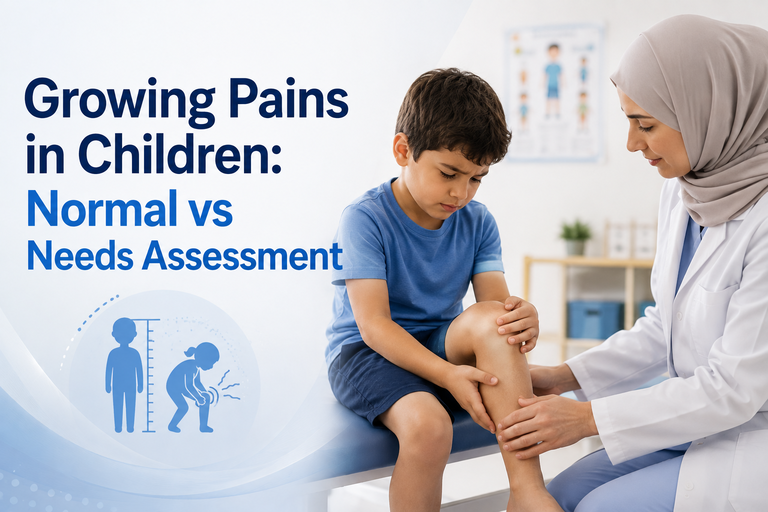
It’s 10 pm and your child is tearful with aching legs — again. By morning, they’re sprinting around as if nothing happened. Few things are more confusing for parents than this pattern, and few phrases are used more loosely than “growing pains.”
Here’s the truth: growing pains are real, common, and harmless — but the label is only safe when applied correctly. Some conditions hide behind it. This guide from the orthopedic team at Health & Style Medical Center explains what genuine growing pains in children look like, and the exact signs that mean something else deserves a look.
What Are Growing Pains?
Growing pains affect roughly one in three children, most often between ages 3–12. Despite the name, they’re not caused by growth itself — the best evidence points to muscle fatigue after active days in children whose bones and muscles are developing at different rates, sometimes with lower pain thresholds and, in some children, contributing foot posture.
The Classic, Reassuring Pattern
- Aching or throbbing in both legs — typically thighs, calves, or behind the knees; muscles, not joints
- Pain in the evening or night, sometimes waking the child
- Completely gone by morning — full activity, no limp
- Comes and goes, often after especially active days
- The child is otherwise entirely well
- Responds to massage, warmth, gentle stretching, and comfort
If your child’s pain fits every point on that list, reassurance is usually the correct medicine.
Red Flags: This Is NOT Growing Pains
Book an assessment promptly if you notice any of the following:
- One-sided pain — growing pains are symmetric; a single painful leg needs a diagnosis
- Joint pain or swelling — pain in a knee, hip, or ankle joint (rather than muscle), or any warm, swollen joint
- Morning symptoms — limping, stiffness, or pain on waking
- Pain during activity — growing pains follow activity; pain during sport (like heel pain in an 8–14-year-old, often Sever’s disease) has a cause
- A limp at any time, or refusal to walk or bear weight
- Systemic signs — fever, fatigue, weight loss, night sweats, or a generally unwell child
- Persistent, worsening, or constant pain in one location
- Pain that doesn’t settle with massage and comfort
None of these makes a serious diagnosis likely — but each makes a proper assessment necessary.
Helping a Child Through Genuine Growing Pains
Massage and warmth — a warm bath before bed and gentle leg massage are remarkably effective
Daytime calf and thigh stretches — regular stretching reduces episode frequency in many children
Check the feet — flat feet and tired-leg complaints often travel together; supportive footwear (and occasionally paediatric orthotics) can reduce evening aching, something our podiatry team assesses gently
Simple analgesia occasionally — for the worst nights, at appropriate paediatric doses
Reassure — anxiety amplifies pain; a calm, confident routine helps the child settle
What Happens at a Orthopedic Assessment?
A child-friendly, unhurried appointment:
- The story — pattern, timing, symmetry, activity links, and family history
- Examination — joints, muscles, gait, leg lengths, and foot posture, done through play where possible
- Imaging or tests only when indicated — most children with true growing pains need none; X-rays and blood tests are reserved for red-flag features
- A clear answer — either well-earned reassurance with a home plan, or early treatment of whatever was hiding behind the label
Both outcomes are wins: either you sleep easier, or a real problem gets caught early — when children’s conditions are most correctable.
Frequently Asked Questions
At what age do growing pains stop?
deserves assessment rather than the growing-pains label.
Do growing pains happen during growth spurts?
with measured growth. That’s also why active days are the classic trigger.
My child only complains about one leg — could it still be growing pains?
are bilateral by definition, and single-limb pain in a child always earns a proper look.
Can flat feet cause my child’s evening leg aches?
flat feet. A combined assessment of gait and foot posture identifies whether support would
help
Aching Legs Tonight? Get Answers, Not Guesses
Most children with nighttime leg pain need nothing more than a warm bath and a confident parent — and an assessment tells you, with certainty, that yours is one of them.
At Health & Style Medical Center in Abu Dhabi, our orthopedic and podiatry teams provide gentle pediatric assessments for growing pains, gait concerns, flat feet, and minor injuries — honest reassurance when all is well, early treatment when it isn’t.
Book your child’s assessment at healthstyle.ae.