

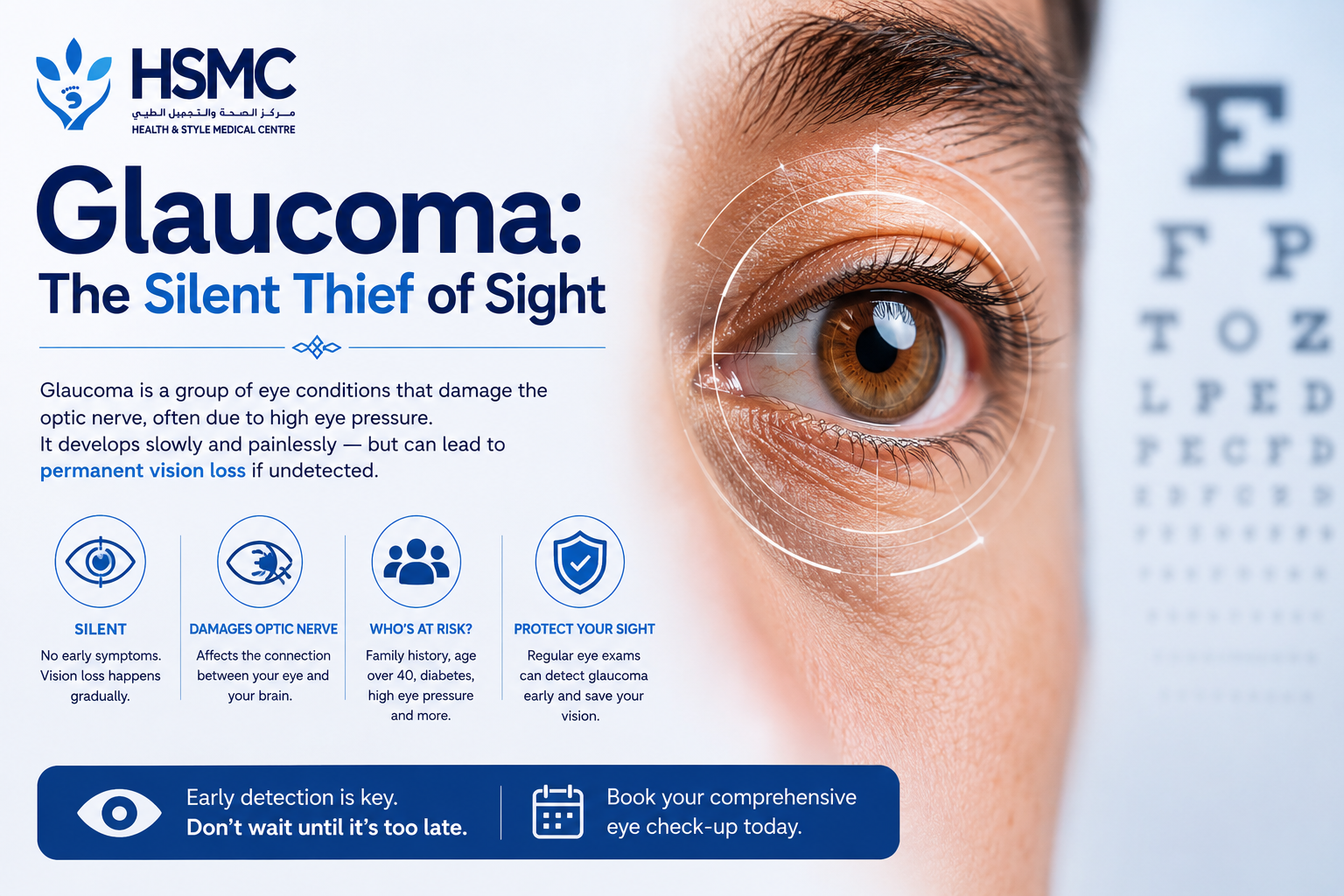
Glaucoma is often called the silent thief of sight because it damages the optic nerve gradually and usually without pain or early symptoms. By the time most people notice a change, some vision has already been lost permanently. The encouraging news is that with early detection and treatment, most people with glaucoma keep useful vision for life.
How glaucoma damages the eye
In most cases, pressure inside the eye rises because fluid does not drain properly. This pressure slowly damages the optic nerve, which carries images from the eye to the brain. The loss usually begins at the edges of your vision, which is why it can go unnoticed for years.
Who is at higher risk
Some people are more likely to develop glaucoma than others, which makes regular screening especially important for them.
- Age over 40, with risk increasing each decade.
- A family history of glaucoma.
- High eye pressure or a thin cornea.
- Diabetes or high blood pressure.
- Long-term use of steroid medication.
Detection and treatment
Because symptoms appear late, screening during a routine eye exam is the best defence. Tests measure your eye pressure, examine the optic nerve, and map your field of vision. When glaucoma is found, treatment with prescription eye drops, laser, or surgery can lower eye pressure and slow or stop further damage. Treatment does not reverse existing loss, which is why catching it early is so valuable.