
Walk into any pharmacy and you’ll find shelves of vitamins. Walk into a wellness clinic and you’ll
find a menu of IV drips promising the same nutrients — faster. So which actually works better? The
honest answer: it depends on what you’re trying to achieve. Here’s a practical, evidence-based
comparison
The Core Difference: Absorption
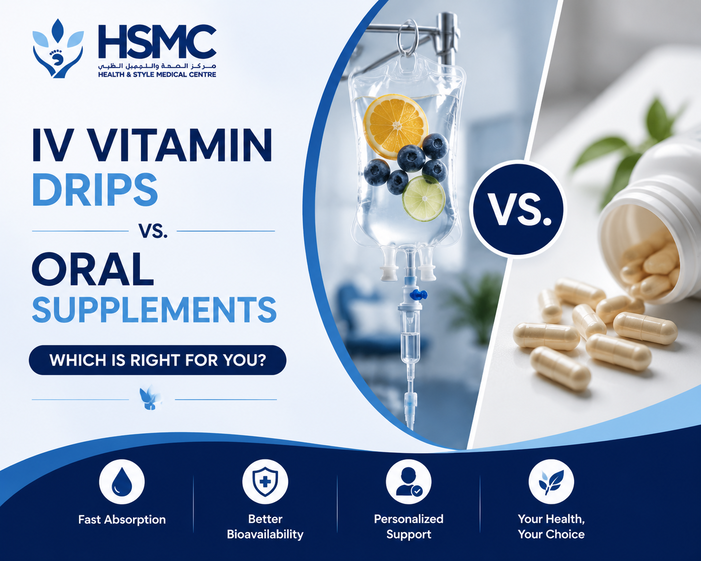
Oral supplements must survive stomach acid, be absorbed through the intestinal wall, and pass
through the liver before reaching your bloodstream. Depending on the nutrient, your gut health, and
what you’ve eaten, absorption can range widely — vitamin B12, for instance, is notoriously poorly
absorbed in older adults and people taking acid-reducing medications, while high-dose oral vitamin
C absorption drops sharply as the dose increases.
IV infusions bypass digestion entirely. Nutrients enter the bloodstream directly at close to 100%
availability, and blood concentrations can reach levels that are physically impossible to achieve
orally — particularly relevant for vitamin C and NAD+.
Speed of Effect
IV therapy wins on speed. Rehydration, electrolyte correction, and nutrient repletion happen within
the session itself. Oral supplementation is a gradual strategy — correcting a documented deficiency
with tablets typically takes weeks to months of consistent daily intake.
This is why IV therapy is often the right tool for acute situations: recovery from illness, dehydration
after travel or exercise, or rapid repletion of a significant deficiency under medical supervision.
Cost and Convenience
Oral supplements win on both. A month of quality supplements typically costs less than a single IV
session, and there’s no clinic visit required. For long-term daily maintenance — vitamin D,
omega-3s, a daily multivitamin — oral supplementation is the sensible default.
IV therapy is best understood as a periodic, targeted intervention rather than a daily habit.
When Oral Supplements Are the Better Choice
- Daily maintenance of adequate nutrient levels in a generally healthy person
- Mild deficiencies that respond well to consistent oral dosing
- Budget-conscious long-term strategies
- Fat-soluble vitamins (A, D, E, K) taken with meals, which are generally well absorbed
orally
When IV Therapy Makes Clinical Sense
- Absorption problems — gastrointestinal conditions (IBD, celiac disease, post-bariatric
surgery) or medications that impair nutrient uptake - Significant documented deficiencies where rapid repletion is preferred
- Dehydration and electrolyte loss from illness, heat, or intense training
- Nutrients with poor oral bioavailability at high doses — high-dose vitamin C,
glutathione, NAD+ - Acute recovery windows — post-illness, post-travel, pre/post major events
- B12 deficiency in patients who can’t absorb it orally — injectable/IV B12 is the
established medical standard here
The Smart Approach: Test, Don’t Guess
The most common mistake in both camps is supplementing blindly. Before committing to either
strategy, a simple blood panel — vitamin D, B12, ferritin, magnesium, and a metabolic profile —
tells you what your body actually needs. This turns wellness spending into targeted treatment:
- Test — identify real deficiencies
- Treat — use IV therapy for rapid repletion where clinically indicated
- Maintain — transition to oral supplementation and dietary strategies
- Retest — confirm levels have normalized
This combined model is how physician-led clinics approach nutrient therapy, and it consistently
outperforms either strategy alone.
Safety Considerations
Oral supplements are broadly safe at recommended doses, though megadosing carries risks (notably
fat-soluble vitamins and iron). IV therapy is safe when delivered in a licensed medical facility
with physician screening — in Abu Dhabi, that means a DOH-licensed clinic with qualified nursing
staff. Avoid unregulated home-service providers without proper medical oversight.
Frequently Asked Questions
Are IV vitamin drips worth the money?
absorption problems — often yes. For general daily nutrition in a healthy person — oral
supplements and a good diet deliver better long-term value.
Can I combine IV therapy with my daily supplements?
take during your clinical screening to avoid excessive dosing of specific nutrients.
How do I know if I have a vitamin deficiency?
concentration, and frequent illness are non-specific. A blood test is the only reliable way to confirm
a deficiency.
How often can I safely have an IV drip?
Your physician will set a schedule — typical wellness protocols range from weekly (short courses)
to monthly or occasional use