
IV vitamin therapy has moved from hospital wards to mainstream wellness, and for good reason. By delivering vitamins, minerals, and hydration directly into the bloodstream, intravenous infusions bypass the digestive system entirely — achieving nutrient levels that oral supplements often cannot match.
If you are considering a vitamin drip in Abu Dhabi, this guide explains how IV therapy works, who it may benefit, what happens during a session, and how to choose a safe, licensed provider.
What Is IV Vitamin Therapy?
IV (intravenous) vitamin therapy is the administration of fluids, vitamins, minerals, amino acids, and antioxidants directly into a vein through a small cannula. Because the infusion enters the bloodstream directly, absorption is close to 100% — compared with oral supplements, where absorption can be significantly reduced by digestive factors, gut health, and interactions with food and medications.
A typical infusion takes 30 to 60 minutes and is administered by a licensed nurse under physician supervision.
Common Types of Vitamin Drips
Most clinics offer formulations tailored to specific goals:
Energy and fatigue support. B-complex vitamins (B1, B2, B3, B5, B6, B12) play a central role in cellular energy production. These drips are popular with professionals managing demanding schedules, frequent travellers, and anyone recovering from periods of stress or poor sleep.
Immunity support. High-dose vitamin C, zinc, and glutathione are commonly combined to support immune function, particularly during seasonal transitions or after illness.
Hydration and recovery. Isotonic fluids with electrolytes help restore hydration after intense exercise, travel, heat exposure, or illness — especially relevant in the UAE’s summer climate.
Skin, hair, and antioxidant support. Glutathione, vitamin C, and biotin-containing formulations are frequently requested for skin brightness and antioxidant support.
Metabolic and performance blends. Amino acids such as L-carnitine and taurine may be included in formulations designed around fitness and metabolic goals.
Potential Benefits of IV Vitamin Therapy
Reported benefits vary by formulation and individual, and IV therapy is a supportive wellness treatment rather than a cure for any condition. Patients commonly seek IV therapy for:
- Faster rehydration than oral fluids alone
- Support for energy levels and reduced fatigue
- Immune system support during high-stress periods
- Recovery after travel, exercise, or illness
- Correction of documented vitamin deficiencies (e.g., B12, vitamin D adjuncts) under medical guidance
The strongest clinical case for IV nutrient therapy is in individuals with confirmed deficiencies, absorption problems, or increased physiological demands. For generally healthy individuals, benefits are best viewed as supportive and short-term.
Is IV Vitamin Therapy Safe?
When administered in a licensed medical facility by trained clinical staff, IV vitamin therapy is generally well tolerated. Safety depends on three things:
1. Medical screening. A physician or licensed clinician should review your health history, medications, and goals before your first infusion. Certain conditions — including kidney disease, heart failure, and G6PD deficiency (relevant for high-dose vitamin C) — require additional caution or may make some infusions unsuitable.
2. Pharmaceutical-grade ingredients. Formulations should be prepared from registered pharmaceutical products under proper aseptic technique.
3. Licensed setting. In Abu Dhabi, IV therapy should only be performed in a facility licensed by the Department of Health (DOH), with qualified nursing staff and physician oversight.
Mild side effects can include temporary bruising at the insertion site, a cooling sensation during infusion, or a vitamin taste. Serious complications are rare in properly screened patients.
What to Expect During Your Session
1. Consultation and screening — a brief medical assessment, sometimes including blood tests if a deficiency is suspected.
2. Formulation selection — your clinician recommends a drip based on your goals and health profile.
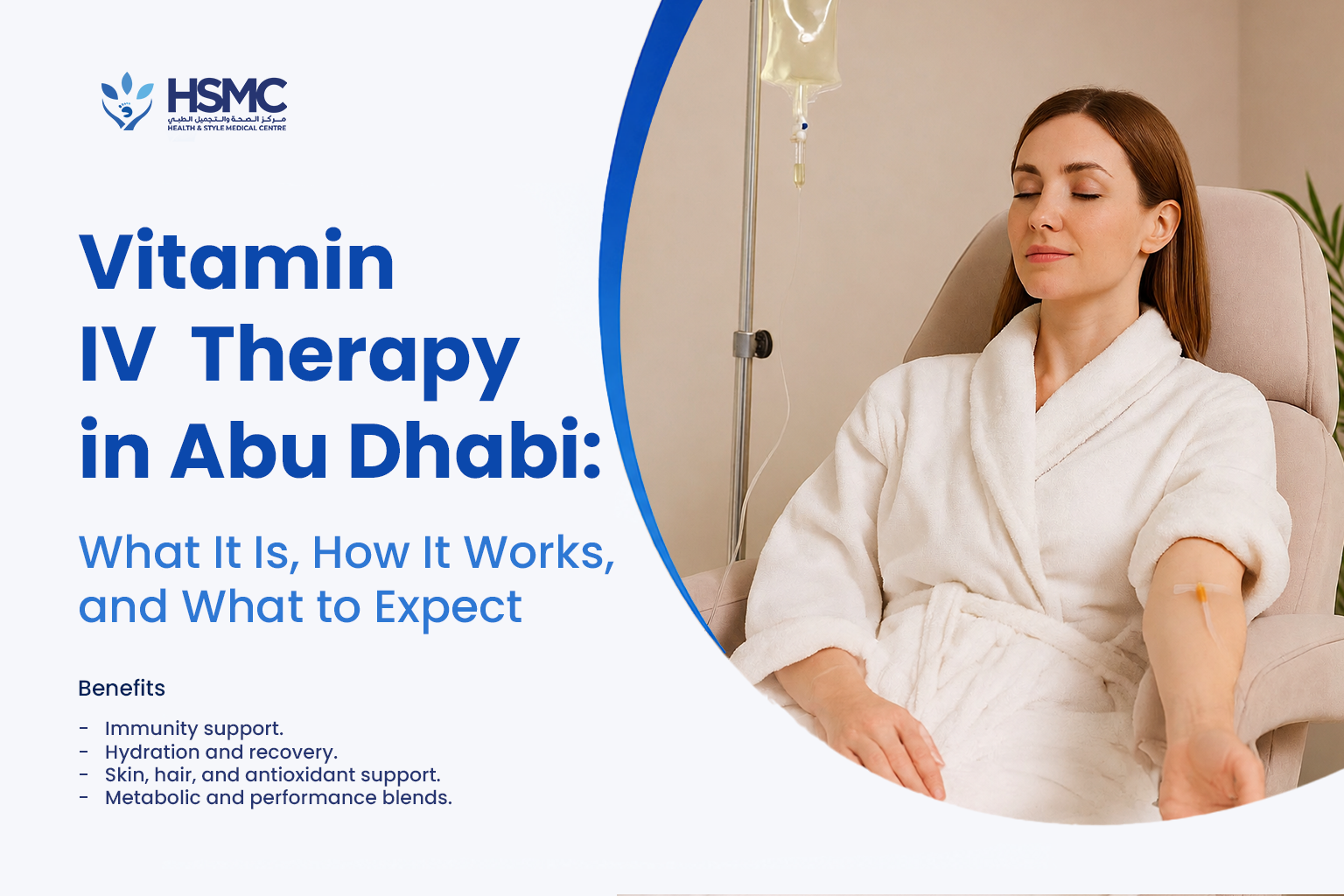
3. Infusion — you relax in a comfortable chair for 30–60 minutes while the drip is administered and monitored.
4. Aftercare — most people return to normal activities immediately.
How Often Should You Get IV Therapy?
Frequency depends on your goals. Some patients book a single session before or after travel or illness; others follow a short course (for example, weekly sessions for four to six weeks) for documented deficiencies, followed by maintenance as advised by their clinician. Your provider should always individualize the schedule — more is not automatically better.
Choosing an IV Therapy Clinic in Abu Dhabi
Before booking, confirm that the clinic:
- Holds a valid DOH facility licence
- Conducts a medical assessment before your first infusion
- Uses registered pharmaceutical-grade products
- Has licensed nurses administering infusions with physician supervision
- Provides transparent pricing and ingredient lists
Our clinic offers blood testing alongside IV therapy so we can also tailor your programme to actual measured deficiencies rather than guesswork — a more clinically sound and cost-effective approach.