

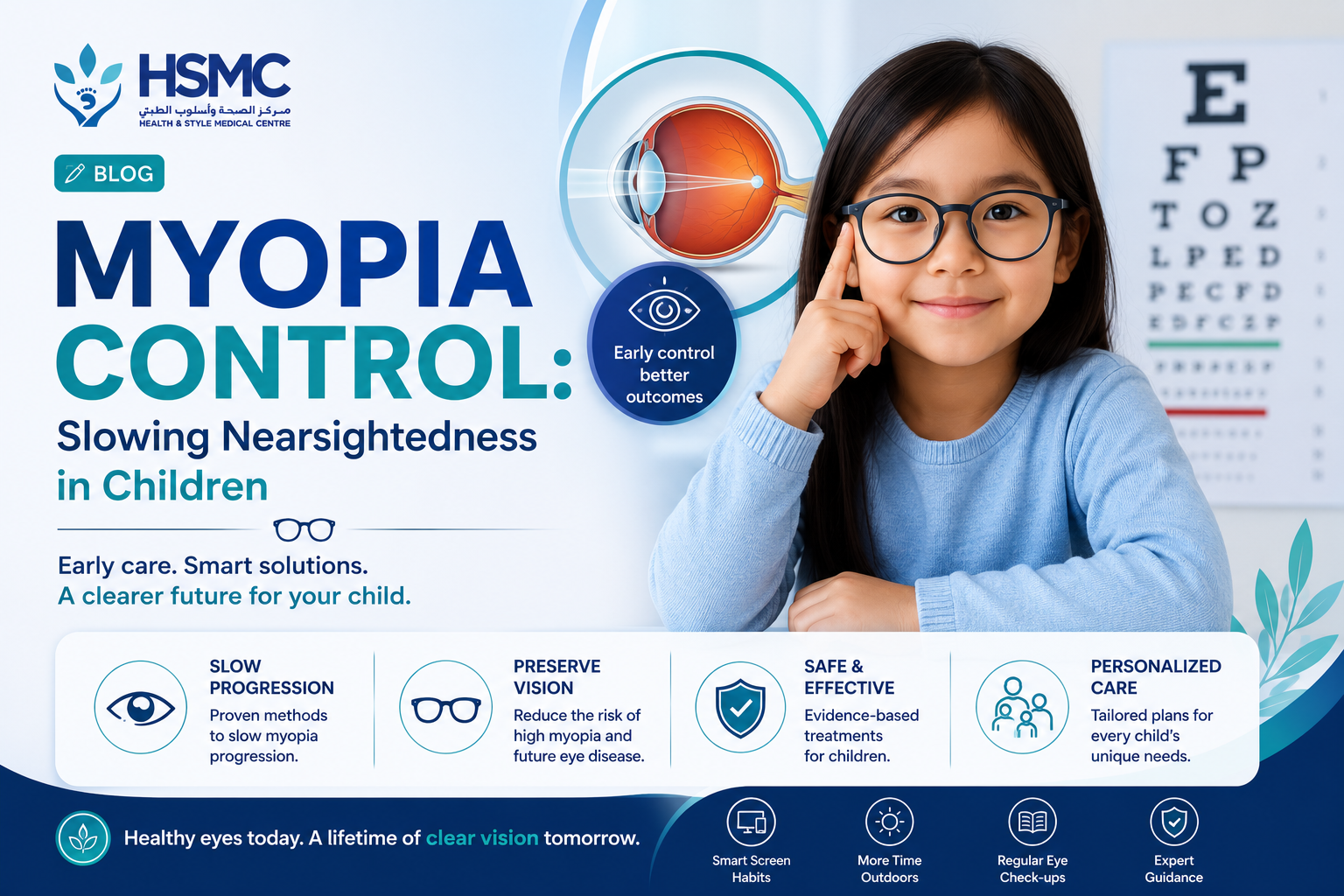
Nearsightedness, or myopia, is becoming far more common in children around the world, and the UAE is no exception. Beyond needing glasses, high myopia raises the lifelong risk of serious eye problems. The encouraging development is that we can now do more than simply update a prescription each year, modern myopia control aims to slow how fast it progresses.
Why slowing myopia matters
Myopia is more than an inconvenience. The more the eye elongates as it grows, the higher the future risk of conditions such as retinal detachment, glaucoma and macular changes in adulthood. Slowing progression during childhood can meaningfully lower these long-term risks.
What drives childhood myopia
Genetics matter, but environment plays a large role too. Long hours of close-up work and screen use, combined with limited time outdoors, are linked to faster myopia progression. One of the simplest protective steps is encouraging more outdoor time in natural daylight.
Myopia control options
Several evidence-based methods can slow progression in suitable children, and an ophthalmologist will recommend the right approach after assessment.
- Specially designed spectacle lenses for myopia control.
- Soft contact lenses developed to slow progression.
- Low-dose atropine eye drops.
- Orthokeratology lenses worn overnight.
- Lifestyle changes such as more outdoor time and screen breaks.
If your child’s prescription keeps rising, ask about myopia control at Health & Style Medical Center.