
Among the many IV therapies available today, NAD+ infusions have attracted the most scientific
curiosity — and the most hype. NAD+ sits at the centre of how every cell in your body produces
energy, repairs DNA, and regulates ageing processes. Here is a clear-eyed look at what NAD+ IV
therapy actually is, what the evidence supports, and who stands to benefit.
What Is NAD+?
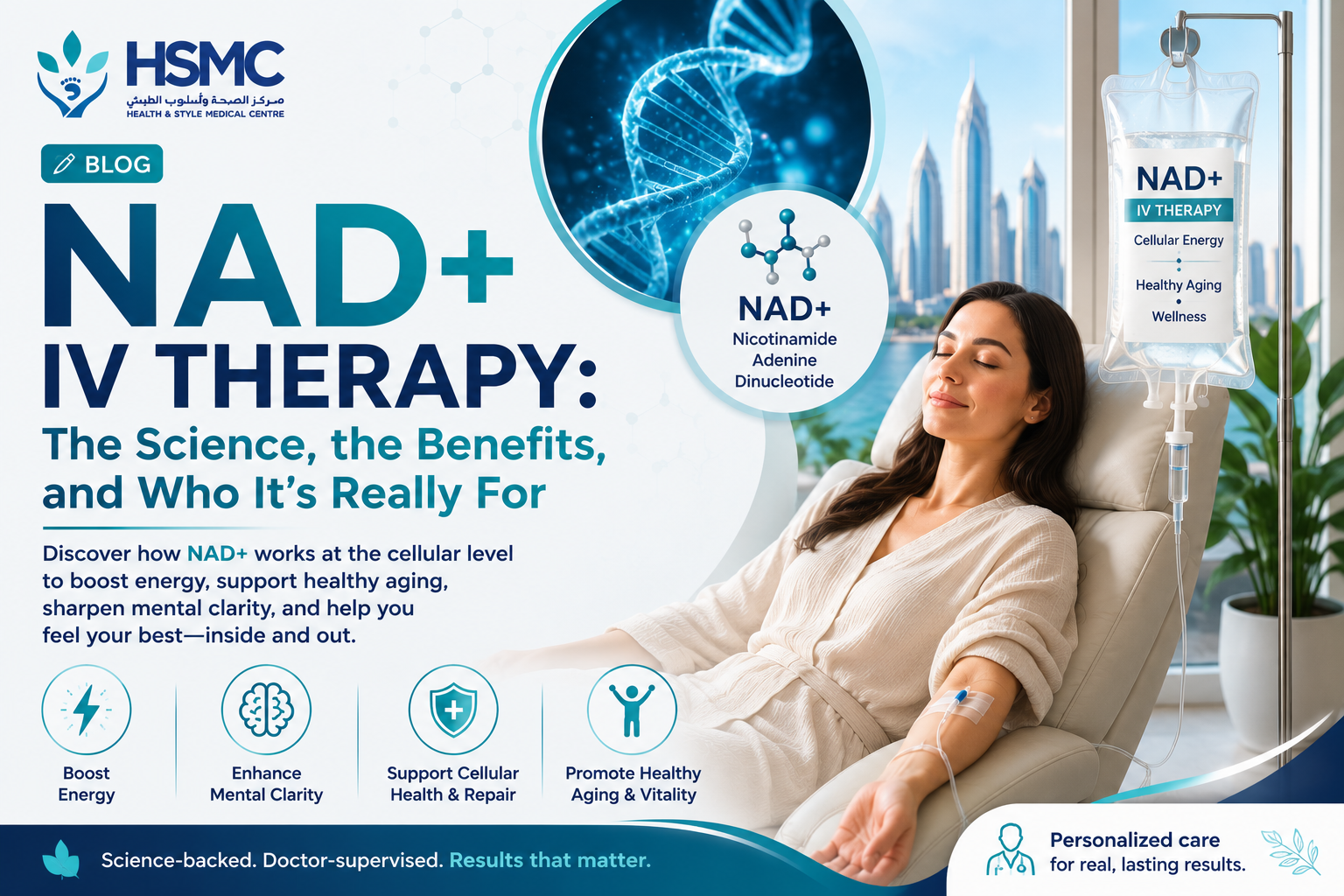
NAD+ (nicotinamide adenine dinucleotide) is a coenzyme found in every living cell. It is essential
for:
- Cellular energy production — NAD+ is a key player in converting food into ATP, the
energy currency of your cells. - DNA repair — enzymes called PARPs, which repair damaged DNA, consume NAD+ to
function. - Sirtuin activation — sirtuins are proteins linked to metabolic regulation and longevity
pathways, and they depend on NAD+ to work. - Circadian rhythm and metabolism regulation.
Research consistently shows that NAD+ levels decline with age — some estimates suggest levels
fall by roughly half between young adulthood and middle age. This decline is associated with
fatigue, slower recovery, metabolic changes, and the cellular hallmarks of ageing.
Why Deliver NAD+ Intravenously?
Oral NAD+ has poor bioavailability — much of it is broken down in the digestive tract before
reaching cells. IV administration delivers NAD+ directly into circulation, achieving levels that oral
supplementation cannot. Precursor supplements such as NMN and NR are an alternative oral
strategy, but IV NAD+ remains the most direct method of raising circulating levels quickly.
Reported Benefits of NAD+ IV Therapy
It is important to be honest about the state of the evidence: NAD+ biology is robustly established in
laboratory research, while large-scale human clinical trials on IV NAD+ are still limited. With that
context, patients and clinicians commonly report:
Energy and mental clarity. Because NAD+ is central to ATP production, many patients pursue
infusions for persistent fatigue, brain fog, and low stamina.
Healthy ageing support. By supporting sirtuin activity and DNA repair pathways, NAD+ therapy
is positioned within broader longevity and preventive wellness programmes.
Recovery and resilience. Athletes and high-performers use NAD+ to support recovery from
physical and cognitive strain.
Addiction recovery support. Some clinics internationally use NAD+ infusions as an adjunct in
supervised addiction recovery programmes, where it has a longer history of clinical use.
Metabolic support. NAD+ plays a role in metabolic regulation, making it of interest to patients
focused on metabolic health alongside medically supervised programmes.
What Does a NAD+ Infusion Feel Like?
NAD+ infusions differ from standard vitamin drips in one important way: they are administered
slowly, typically over 1.5 to 4 hours depending on dose. Infusing too quickly can cause temporary
chest tightness, flushing, or nausea — all of which resolve by slowing the drip rate. An experienced
nursing team will titrate the rate to your comfort.
A typical protocol might involve:
- Initial course — a loading series (for example, 3–6 infusions over 2–4 weeks)
- Maintenance — monthly or quarterly infusions, individualized to your response and goals
Doses commonly range from 250 mg to 1,000 mg per session, determined by your physician.
Who Should Consider NAD+ Therapy — and Who Shouldn’t
NAD+ IV therapy may be worth discussing with your physician if you experience persistent fatigue
not explained by an untreated medical condition, are engaged in a structured healthy-ageing or
performance programme, or are recovering from periods of high physical or cognitive stress.
It is not a substitute for treating underlying medical conditions. Fatigue, brain fog, and low energy
can signal thyroid dysfunction, anaemia, vitamin D or B12 deficiency, sleep apnoea, or depression
— all of which should be evaluated first. A responsible clinic will screen for these before
recommending a NAD+ programme, and may pair infusions with laboratory testing.
NAD+ therapy requires medical review in patients who are pregnant or breastfeeding, or who have
significant cardiac, hepatic, or renal conditions.
NAD+ IV vs. Oral NAD+ Precursors (NMN/NR)
| NAD+ IV Infusion | Oral NMN/NR | |
| Bioavailability | Direct to bloodstream | Variable; converted in the body |
| Onset | Rapid | Gradual (weeks) |
| Convenience | Clinic visit, 1.5–4 hrs | Daily capsule |
| Best for | Rapid repletion, structured programmes | Daily maintenance |
Many longevity-focused patients combine both: periodic IV infusions with daily oral precursor
support, under clinical guidance.
Frequently Asked Questions
How long do the effects of NAD+ IV therapy last?
report effects lasting several days to weeks after a loading course, which is why maintenance
schedules are individualized
Is NAD+ IV therapy safe?
administration, NAD+ infusions are generally well tolerated. Infusion-rate side effects (flushing,
nausea) resolve by slowing the drip.
How many sessions do I need?
maintenance. Your physician will tailor this to your goals and response.
Can NAD+ therapy reverse ageing?
processes associated with healthy ageing; it should be viewed as one component of a broader
strategy including sleep, nutrition, exercise, and preventive screening.