People often use the word hijama to mean one thing, but cupping actually comes in two main forms: dry and wet. Both use suction cups, yet they differ in technique, sensation and purpose. Understanding the difference helps you choose the right option with your practitioner at Health & Style Medical Center
Dry cupping
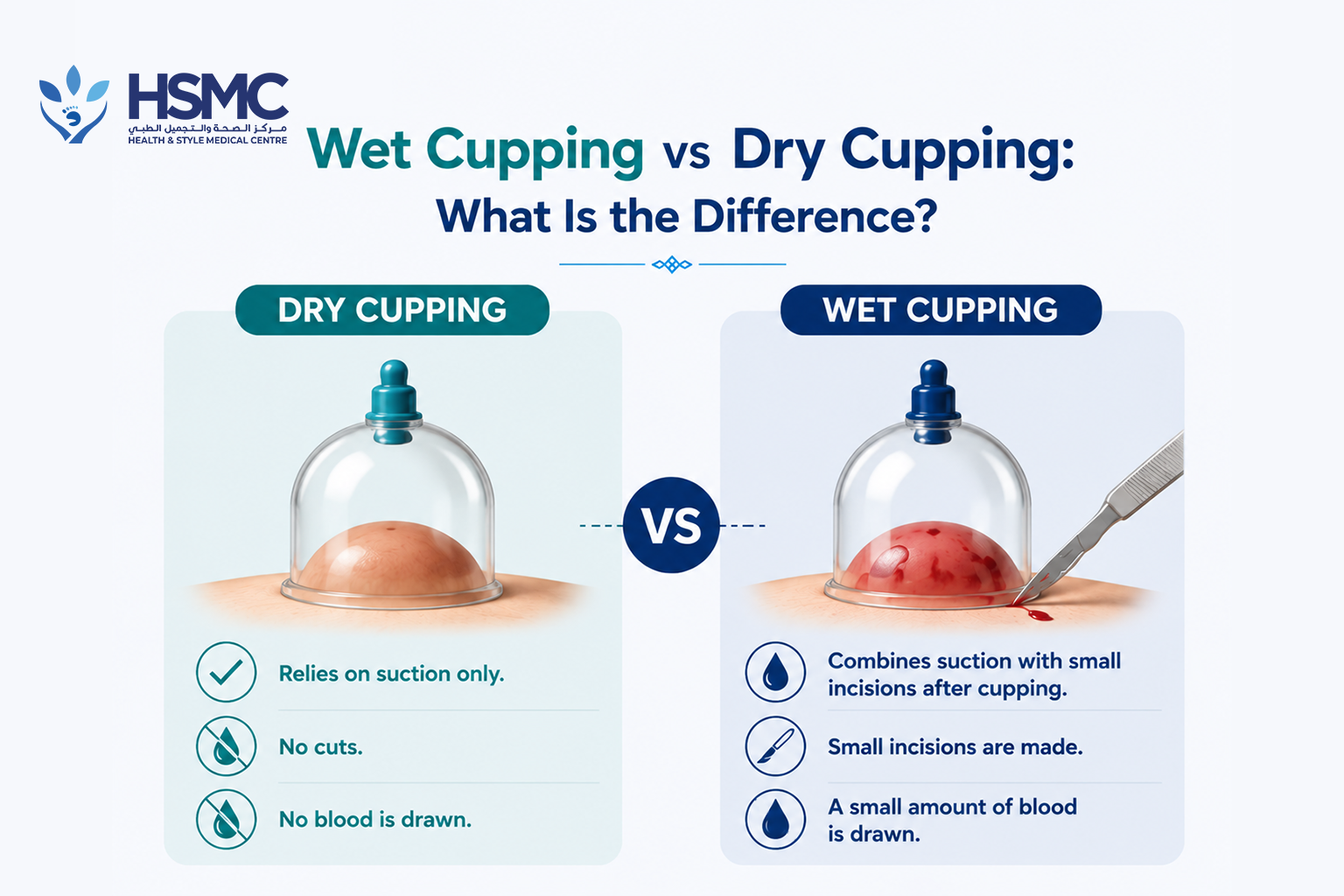
In dry cupping, cups are placed on the skin and suction is created either with heat or a hand pump. The skin is gently drawn upward and the cups are left in place for a few minutes. No skin is broken and no blood is removed. It is often used to ease muscle tightness and promote relaxation, and it may leave temporary circular marks that fade within days.
Wet cupping (traditional hijama)
Wet cupping begins like dry cupping, but the practitioner then makes very light, superficial scratches on the skin and reapplies the cups so that a small amount of blood is drawn out. This is the form most associated with the Sunnah. It is always performed with sterile, single-use instruments to protect against infection.
Which one is right for you
The choice depends on your goal, comfort and health background.
- Prefer no skin breakage? Dry cupping may suit you.
- Following the traditional practice? Wet cupping is the classic method.
- On blood thinners or with a bleeding tendency? Tell your practitioner first.

- Tags:
- Hijama