

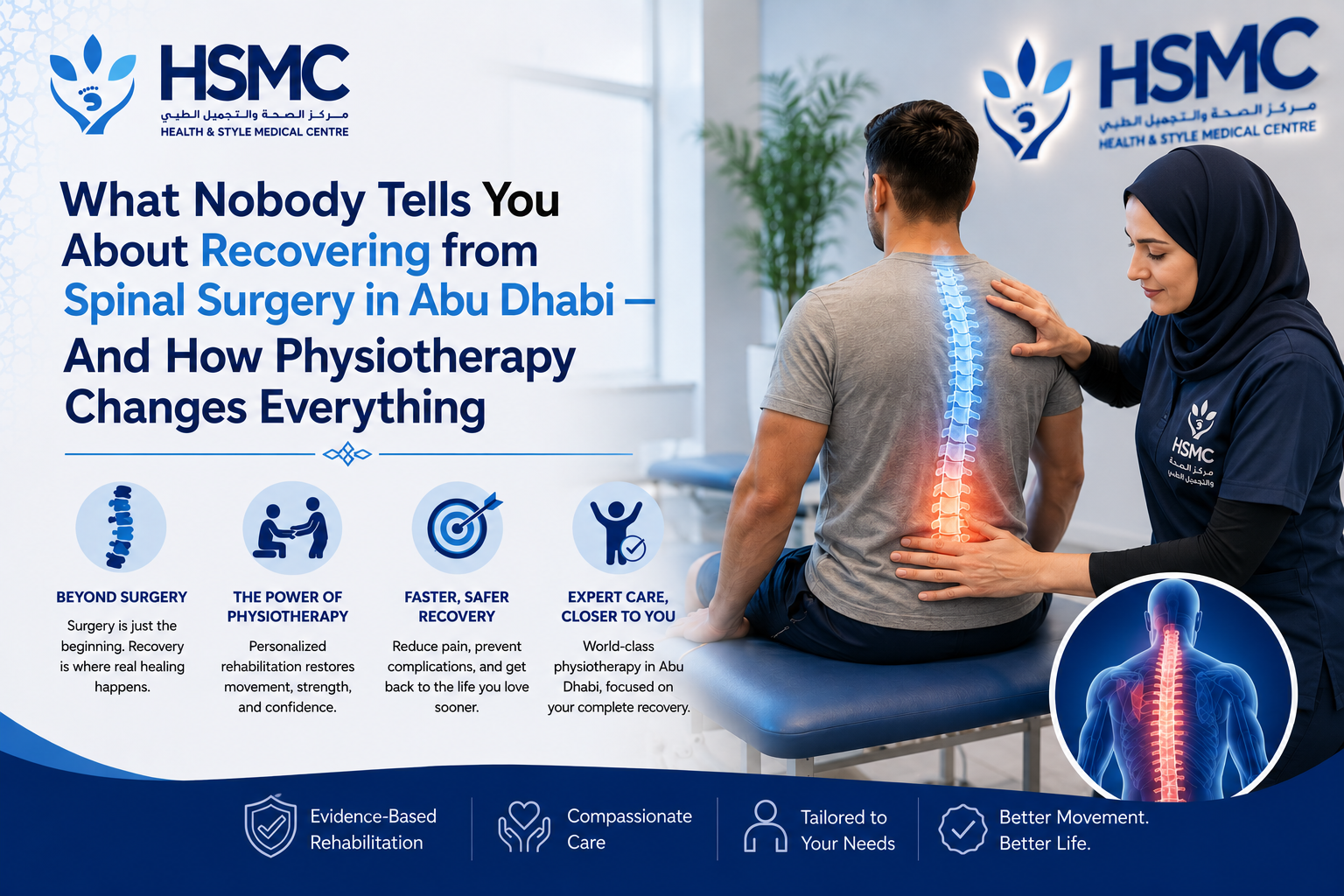
Spinal surgery is a significant decision. The weeks or months of escalating pain, the
conservative treatments that have been tried and found insufficient, the conversations with
surgeons, the weighing of risks and benefits — by the time most patients in Abu Dhabi reach
the operating table, they have already been through an emotionally and physically
demanding journey.
What many of them are not fully prepared for is what comes next.
The surgery addresses the structural problem — the herniated disc that is compressing a
nerve, the stenosis that is narrowing the spinal canal, the unstable segment that is causing
intractable pain. What it does not automatically restore is the muscular strength, movement
quality, functional capacity, and neurological recovery that prolonged pain, restricted
activity, and the surgical procedure itself have compromised
That restoration is what physiotherapy rehabilitation provides. And without it, the outcomes
of spinal surgery — however technically successful the procedure — are significantly worse
than they could and should be
This article tells you what the consent form and the discharge instructions do not cover: the
realities of spinal surgery recovery, the challenges that nobody prepares you for, and how
expert post-surgical physiotherapy changes the trajectory of your recovery.
The Most Common Spinal Surgeries and What They Involve
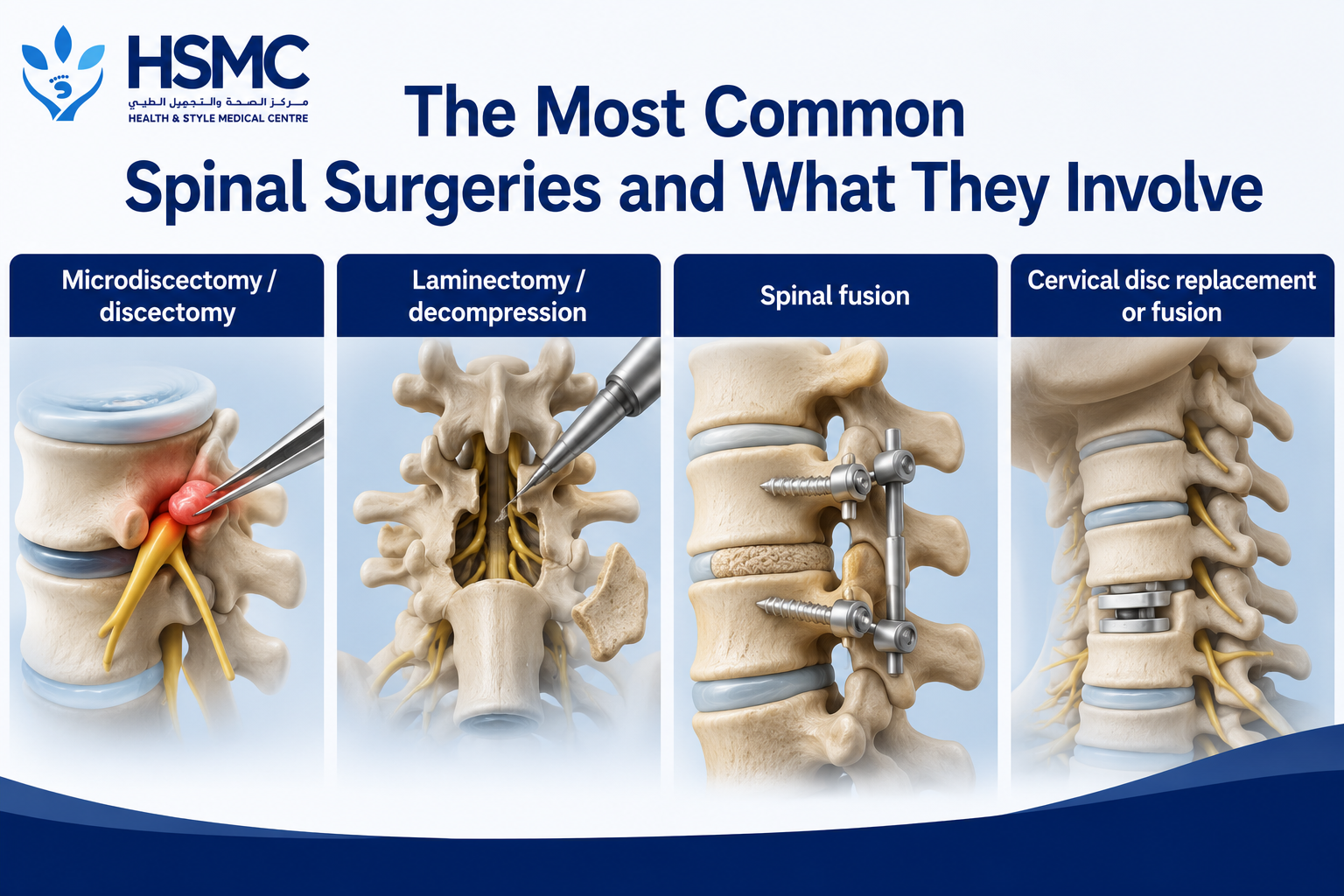
Understanding what your surgery actually did to your spine helps you understand what recovery requires.
Microdiscectomy / discectomy. The most common spinal surgical procedure — removal of
a herniated disc fragment that is compressing a nerve root. A microdiscectomy is performed
through a small incision with microscopic visualisation, producing less soft tissue disruption
than open approaches. Most patients go home within one to two days and can begin
walking immediately.
Laminectomy / decompression. Removal of the lamina (the back of a vertebra) to create
more space in the spinal canal — typically for spinal stenosis. A more extensive procedure
than microdiscectomy, with a longer recovery.
Spinal fusion. The joining of two or more vertebrae into a single, immobile unit — used for
instability, spondylolisthesis, deformity correction, or as part of a decompression procedure.
Fusion surgery has the most demanding recovery of any spinal procedure, typically requiring twelve months before the fusion is considered solid and full recovery can be assessed.
Cervical disc replacement or fusion. Surgery on the neck — for cervical disc herniation or
stenosis producing arm symptoms. Recovery involves specific neck precautions and a
graduated return of cervical mobility.
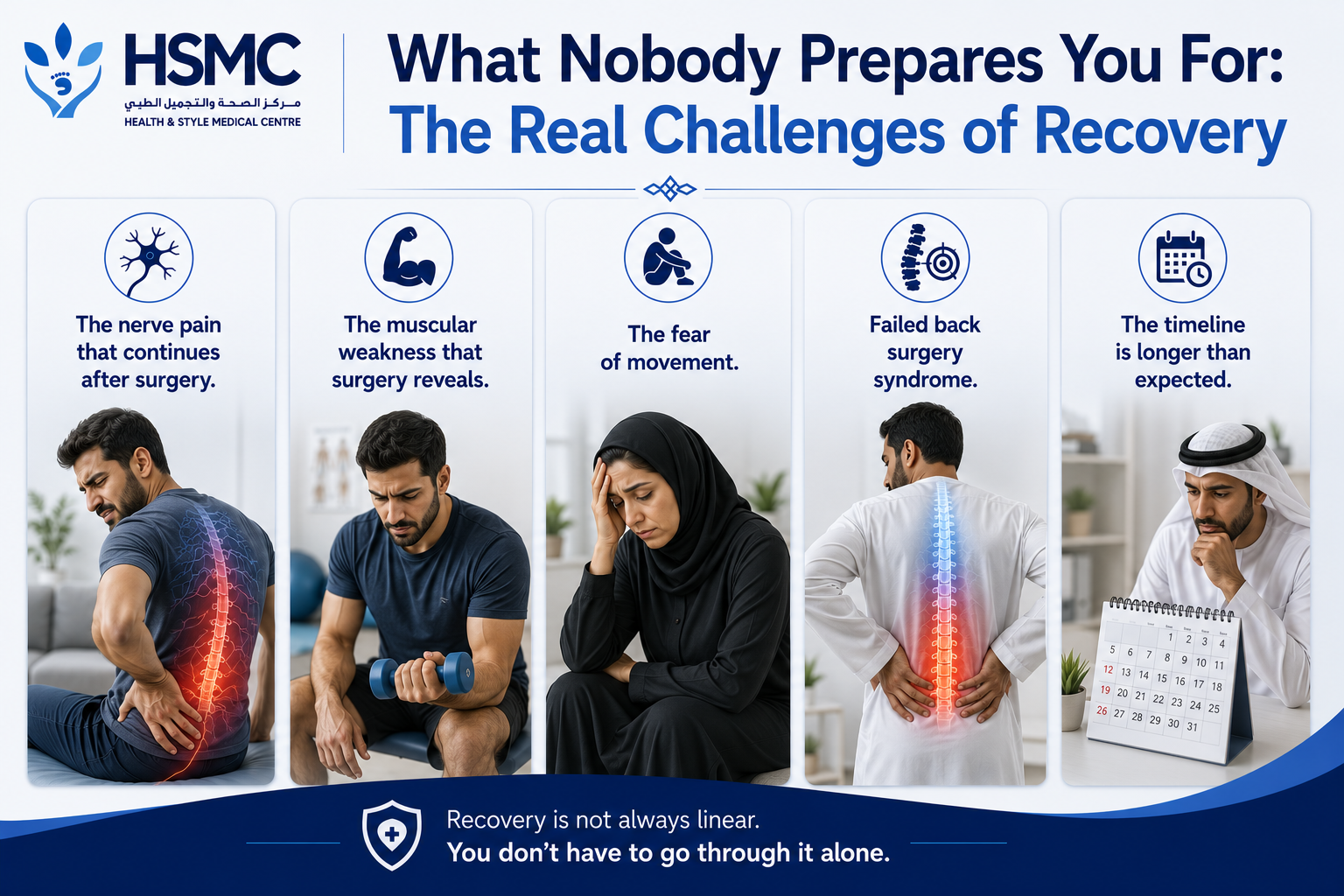
What Nobody Prepares You For: The Real Challenges of Recovery
The nerve pain that continues after surgery.
Perhaps the most distressing aspect of recovery from disc surgery — and the one that most
surprises patients — is that leg or arm nerve pain often does not disappear immediately
after surgery. The surgical decompression removes the mechanical compression of the
nerve, but the nerve itself has been inflamed and irritated — sometimes for months — and
its recovery takes time.
Nerve recovery follows a predictable but slow timeline. Pain, numbness, and tingling in the
affected limb commonly persist for weeks to months after technically successful surgery.
Patients who are not prepared for this experience it as evidence that the surgery has not
worked — which triggers anxiety that can significantly impair the rehabilitation process.
Our physiotherapists set realistic expectations for nerve recovery and monitor neurological
signs at every session — distinguishing the normal slow recovery of an irritated nerve from
signs of inadequate decompression that warrant surgical review.
The muscular weakness that surgery reveals.
The months of pain and restricted activity that precede spinal surgery produce significant
muscular deconditioning — often without the patient’s awareness, because the pain has
dominated their attention. After surgery, when the pain begins to reduce, the weakness
becomes apparent. The deep stabilising muscles of the spine — the multifidus and
transversus abdominis — are particularly affected, as they are specifically inhibited by pain
and by the neural disruption that disc herniation produces.
This weakness is not a surgical complication. It is the consequence of months of pathology
and activity restriction. But it must be addressed — because it leaves the spine without the
internal support it needs for safe, progressive return to activity.
The fear of movement.
Patients who have experienced severe spinal pain develop, entirely understandably, a fear of
the movements and activities that provoked that pain. This fear — clinically called
kinesiophobia — persists after surgery and can significantly impair rehabilitation. The
patient who is afraid to bend forward, to lift anything, or to exercise vigorously is not able to
engage fully with the rehabilitation process that produces recovery.
Pain neuroscience education — explaining why the fear response developed and why post
surgical movement is safe and essential — is one of the most important early interventions
our physiotherapists provide.
Failed back surgery syndrome.
Failed back surgery syndrome (FBSS) — persistent or recurrent pain after technically
successful spinal surgery — is more common than most patients are told. It affects
approximately 10–40% of patients who undergo lumbar spinal surgery, with the wide range
reflecting the heterogeneity of the surgical procedures and patient populations involved.
The most common causes of FBSS include: inadequate rehabilitation post-surgery,
recurrent disc herniation at the operated level, adjacent segment disease, epidural fibrosis,
and the persistence of central sensitisation that developed during the prolonged pain period
preceding surgery.
Expert post-surgical physiotherapy significantly reduces the risk of FBSS by addressing the
muscular, functional, and psychological factors that surgery alone cannot correct — and by
identifying early signs of inadequate recovery that warrant timely surgical review.
The timeline is longer than expected.
Patients who expect to feel dramatically and immediately better after spinal surgery are
frequently disappointed in the first weeks of recovery. Surgery triggers an acute
inflammatory response that temporarily worsens pain before it improves. The muscular
deconditioning and neurological recovery described above take weeks to months to resolve.
Full recovery from lumbar spinal fusion — the most extensive procedure — takes a minimum
of twelve months.
Understanding the realistic recovery timeline from the outset prevents the despair that
drives premature conclusions that the surgery has failed.
The Phases of Post-Spinal Surgery Rehabilitation
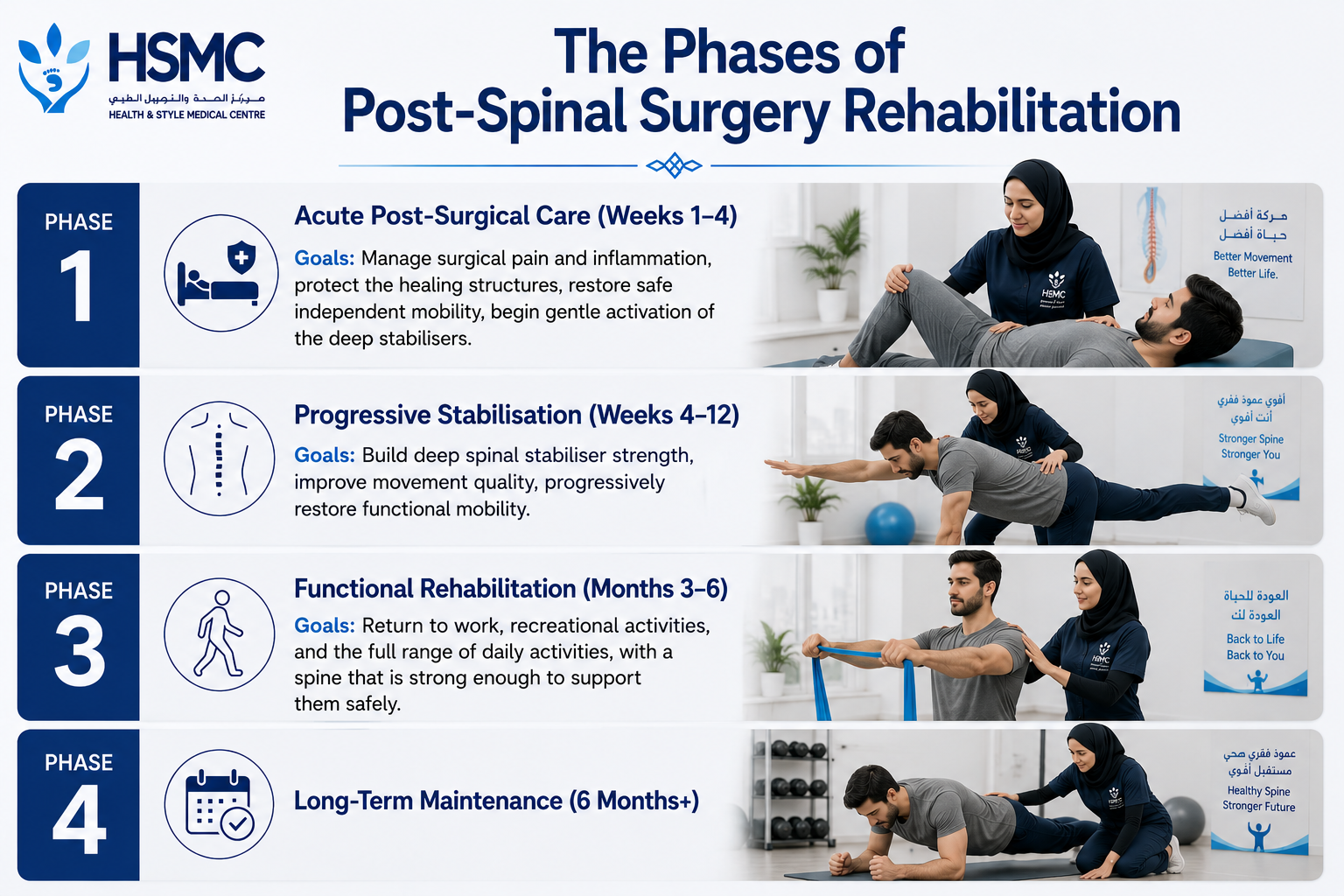
Phase 1: Acute Post-Surgical Care (Weeks 1–4)
Goals: Manage surgical pain and inflammation, protect the healing structures, restore safe
independent mobility, begin gentle activation of the deep stabilisers.
Key interventions:
- Activity modification and movement education — what is safe, what should be avoided,
- and how to perform daily activities in ways that protect the healing spine
- Gentle walking — the most evidence-supported early post-surgical activity for lumbar
- spine conditions. Progressive walking from short to longer distances is prescribed from
- day one where tolerated
- Breathing and deep stabiliser activation — gentle diaphragmatic breathing exercises
- combined with very low-load transversus abdominis activation begin the process of
- restoring deep spinal stability without loading the healing structures
- Postural awareness and positioning — optimising sitting, standing, and sleeping
- positions to minimise pain and protect the surgical site
- Neural mobilisation (where appropriate) — gentle nerve mobilisation techniques to
- address the neural irritation that produces ongoing limb symptoms after discectomy
Phase 2: Progressive Stabilisation (Weeks 4–12)
Goals: Build deep spinal stabiliser strength, improve movement quality, progressively
restore functional mobility.
Key interventions:
- Progressive core stabilisation programme — from the gentle activation of Phase 1 to
- more demanding exercises including dead bugs, bird dogs, and modified planks that build the deep muscular support the spine requires
- Hip and gluteal strengthening — restoring the muscular capacity of the hip and pelvis that protects the lumbar spine during functional movement
- Movement retraining — teaching the patient to use their hips and legs for lifting and bending rather than their spine, stablishing the movement patterns that protect the operated level
- Gradual return to normal daily activities — sitting tolerance, walking distances, light
- household tasks
- Pain neuroscience education — addressing the fear-avoidance behaviours and
- catastrophising that impair rehabilitation progress
Phase 3: Functional Rehabilitation (Months 3–6)
Goals: Return to work, recreational activities, and the full range of daily activities, with a spine that is strong enough to support them safely.
Key interventions:
- Progressive loading — gradually increasing the demands on the spine through functional
- movement patterns that simulate work and recreational activities
- Cardiovascular reconditioning — building the general fitness that the months of pain and
- restricted activity have eroded
- Work-specific rehabilitation — for patients returning to physically demanding jobs, a
- structured, graded return-to-work programme that progressively reintroduces the
- specific demands of their occupation
- Sport and recreation-specific rehabilitation — for patients with active lifestyles, a
- graduated return to the activities they wish to resume
Phase 4: Long-Term Maintenance (6 Months+)
The goal of spinal surgery rehabilitation is not simply to get the patient back to their pre
surgical state — that state, in many cases, was one of inadequate spinal stability and poor
movement quality that contributed to the problem requiring surgery. The goal is to leave the
patient with a spine that is stronger, better supported, and better maintained than it was
before the problem developed.
Long-term maintenance involves continuing a regular core stabilisation and general exercise
programme, maintaining a healthy weight, and returning for physiotherapy review if new
symptoms develop — rather than waiting for them to become severe.
A Word for Families and Carers
Spinal surgery recovery is demanding — physically, cognitively, and emotionally. The
support of family and carers in the early recovery period is invaluable, and the way that
support is provided matters.
Our physiotherapists work with families and carers to ensure they understand the recovery
process, know how to assist without undermining the patient’s independence and
rehabilitation progress, and recognise the signs that indicate the patient needs
reassessment.
Recovery from spinal surgery is a team effort. And the team that achieves the best
outcomes is one that includes the patient, their family, their surgeon, and their
physiotherapist — all working toward the same goals, with the same understanding of what
recovery requires
The Health & Style Post-Surgical Spinal Rehabilitation Service
At Health & Style Medical Centre, we provide comprehensive, expert post-surgical
rehabilitation for all types of spinal surgery — from single-level microdiscectomy to complex
multilevel fusion procedures. We work in close collaboration with Abu Dhabi’s leading spinal
surgeons and neurosurgeons to ensure that our rehabilitation programmes are aligned with
each patient’s surgical procedure and recovery requirements.
Our programme is evidence-based, individually designed, and delivered by physiotherapists
with specific expertise in neurological and post-surgical rehabilitation. We do not offer
generic exercise sheets. We offer expert, personalised rehabilitation that gives each patient
the best possible chance of achieving the outcome their surgery made possible.
Book your post-spinal surgery rehabilitation assessment at Health & Style Medical
Centre, Abu Dhabi.