

Flat feet in children is one of the most commonly Googled paediatric health topics by
parents across the UAE — and with good reason. When a parent watches their child walk
and notices that the inner arch of the foot appears absent, the foot rolling inward, or the
heels tilting outward, it raises immediate questions.
Is this normal? Will it cause problems?
Does my child need orthotics? Does my child need physiotherapy?
The answers depend enormously on the child’s age, the nature of the flat foot, whether it is
causing symptoms, and what is happening in the rest of the lower limb. And because the
answers are so varied — and the advice so frequently oversimplified — we see many Abu
Dhabi families who have either been told to worry about something that requires no
intervention, or reassured about something that genuinely needed attention.
This article provides a clear, expert-informed framework for understanding flat feet in
children — when they are normal, when they are not, and when physiotherapy makes a
meaningful difference.
Understanding the Foot Arch
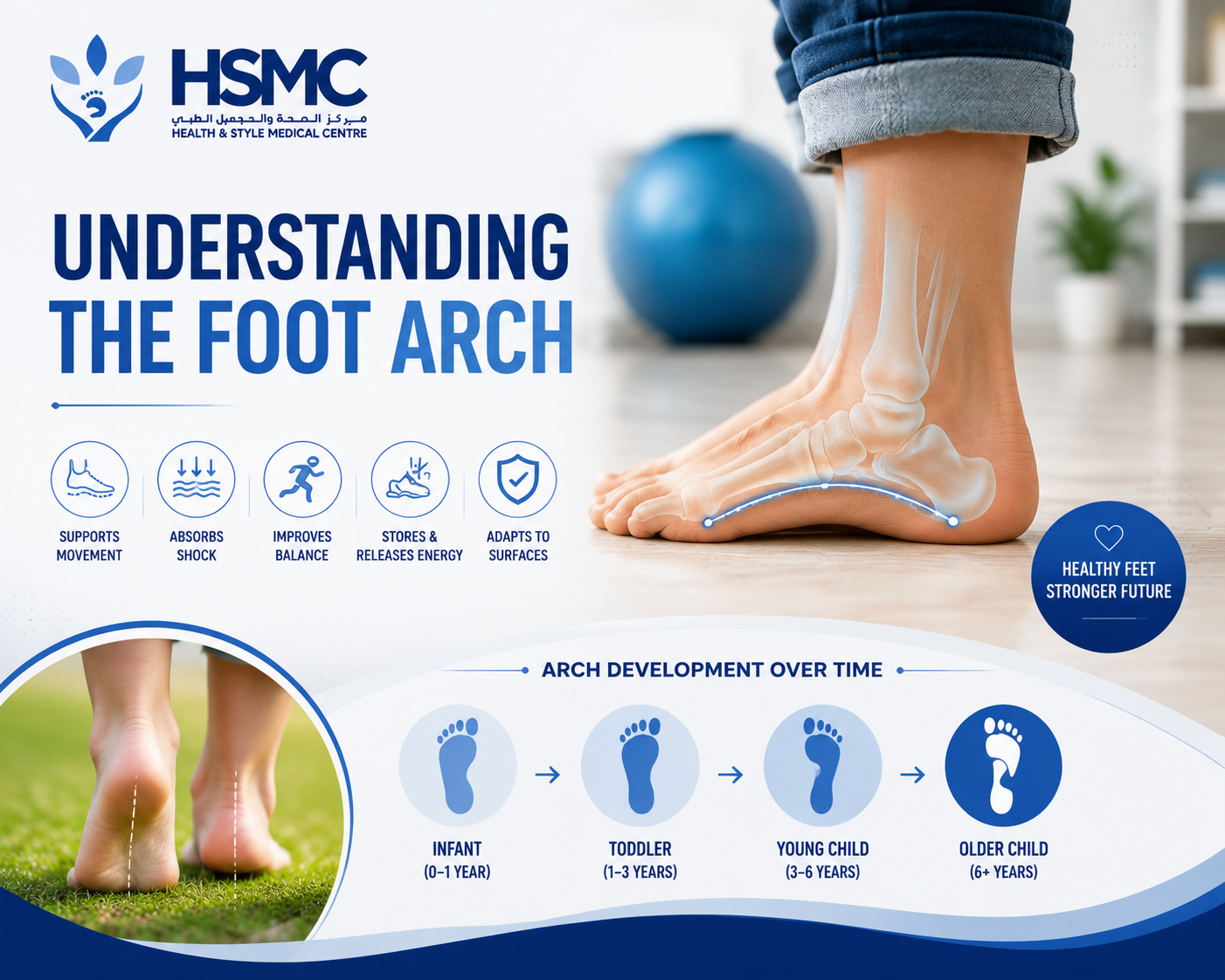
The medial longitudinal arch — the inner arch of the foot that most people refer to as “the
arch” — is formed by the bones, ligaments, tendons, and intrinsic muscles of the foot
working together as a dynamic structure. It is not simply a static shape. It loads and unloads
with every step, storing and releasing energy, absorbing shock, and adapting to the
surfaces we walk on.
At birth, the foot arch is not visible — infants have a fat pad under the medial arch that fills
the space and gives the appearance of a flat foot. The arch develops gradually through
childhood as the fat pad is absorbed, the bones of the foot mature, the muscles and
ligaments develop strength and stiffness, and the child begins to walk and run on varied
surfaces
This is why flat feet in young children are so frequently normal — and why understanding
the child’s age is the first and most important step in interpreting what you are seeing.
At What Age Should the Arch Develop?
The foot arch is typically not visible in children under two years of age — this is entirely
normal and requires no intervention or monitoring.
Between the ages of two and six, the arch gradually develops in most children. By age six,
the majority of children have a visible arch when standing. Some children develop an arch
more slowly — and this variation is generally within the range of normal.
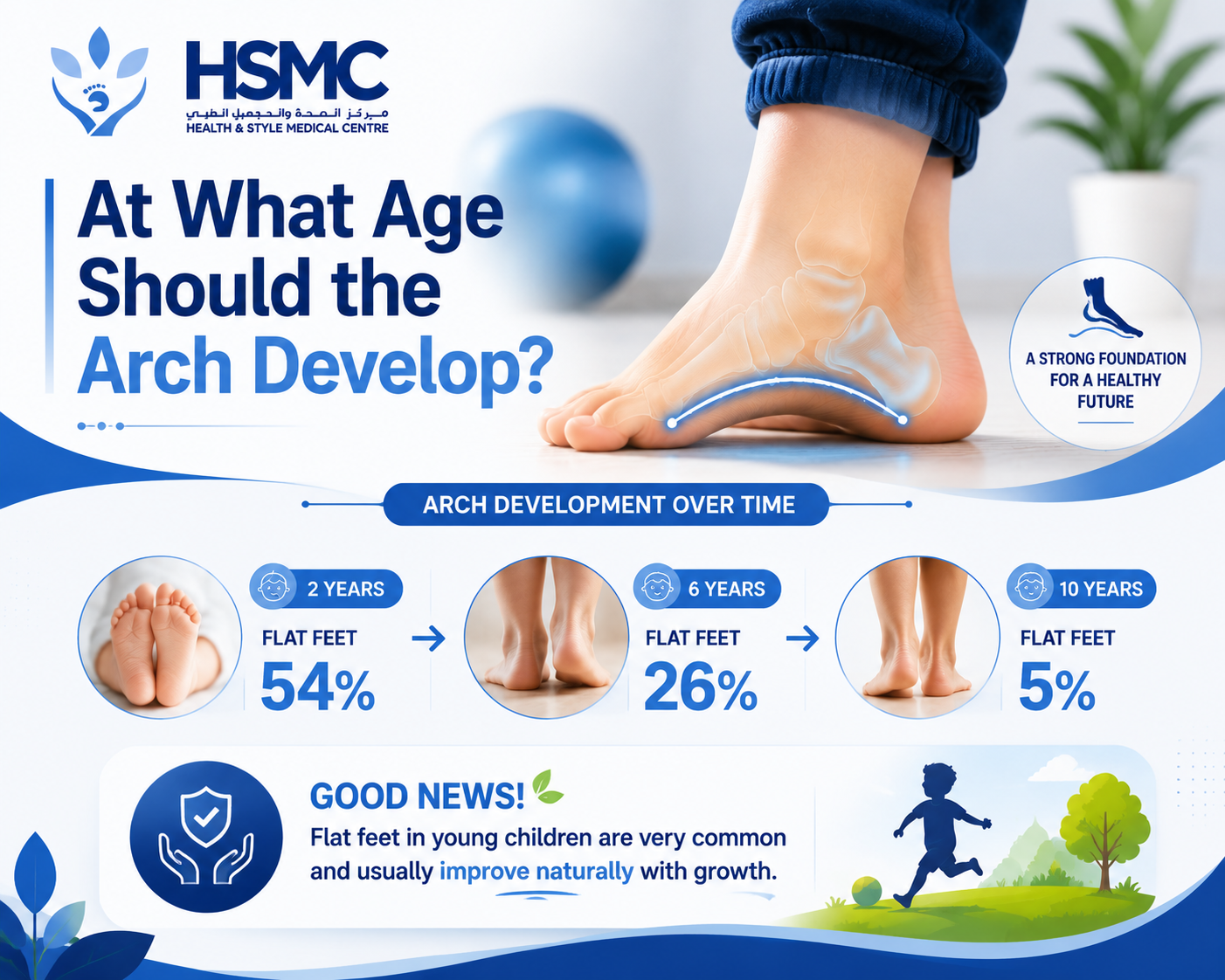
Studies of arch development have found that:
- Approximately 54% of two-year-olds have flat feet
- By age six, this falls to approximately 26%
- By age ten, approximately 5% of children still have flat feet
The spontaneous resolution of flat feet during childhood reflects the normal maturation
process. For most young children, the appropriate management is watchful observation —
not orthotics, not physiotherapy, and not anxiety.
Flexible vs. Rigid Flat Feet: The Critical Distinction
The single most important clinical distinction in assessing flat feet in children is whether the
flat foot is flexible or rigid.
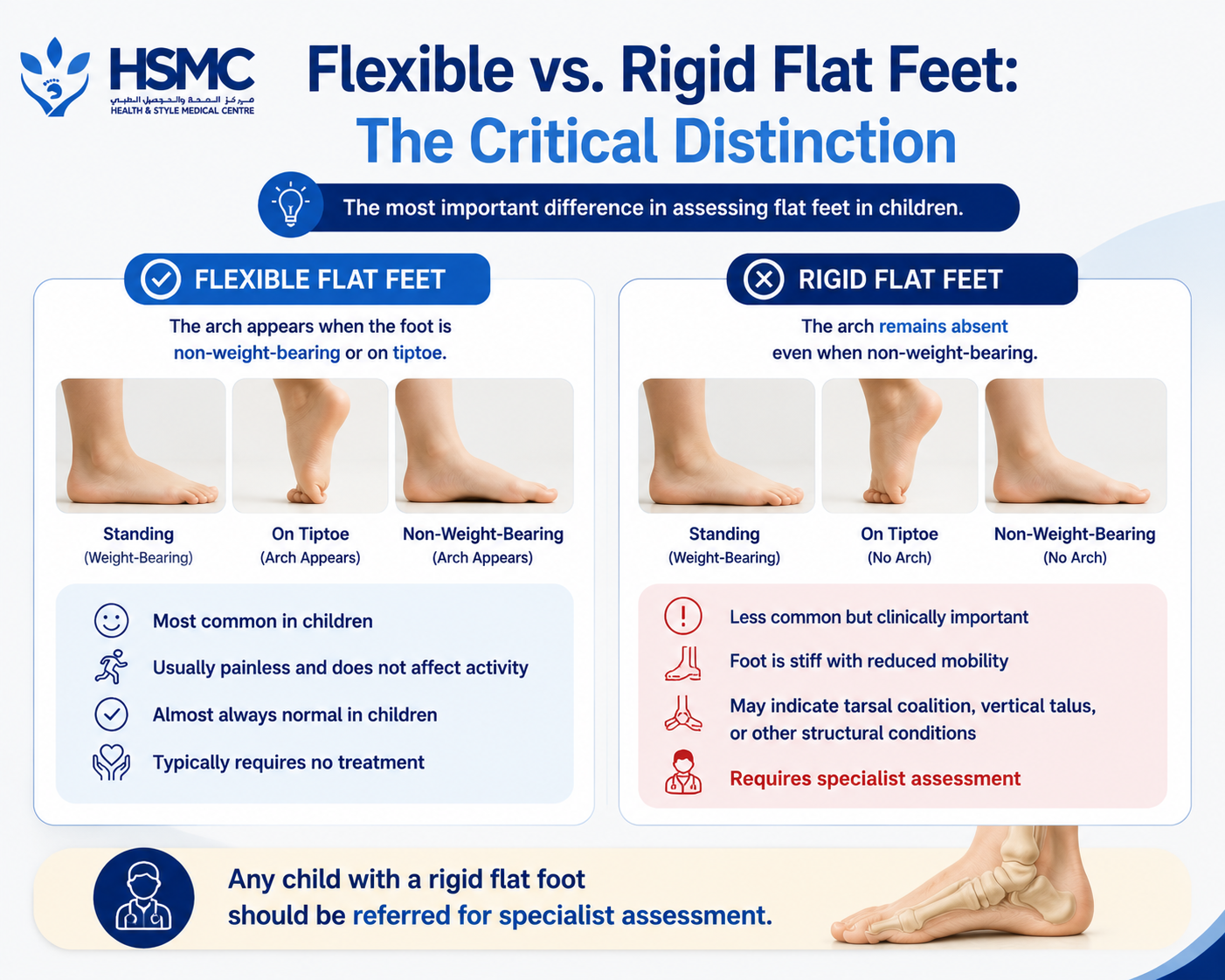
Flexible flat feet are the most common type. In a flexible flat foot, the arch is absent or
reduced when the child is standing and bearing weight — but the arch appears when the
child stands on tiptoe or when the foot is non-weight-bearing. The foot is mobile and
adaptable.
Flexible flat feet in children are almost always normal — particularly in younger children.
They rarely cause pain, do not impair running or sport, and in the large majority of cases do
not require treatment.
Rigid flat feet are significantly less common and clinically more important. In a rigid flat
foot, the arch remains absent regardless of weight-bearing status — the foot does not form
an arch even when non-weight-bearing. The foot is stiff and has reduced mobility. Rigid flat
feet in children may indicate tarsal coalition (an abnormal bony or fibrous connection
between two or more bones of the hindfoot), vertical talus, or other structural conditions
that require specific assessment and management.
Any child with a rigid flat foot should be referred for specialist assessment.
When Flat Feet Are a Cause for Concern
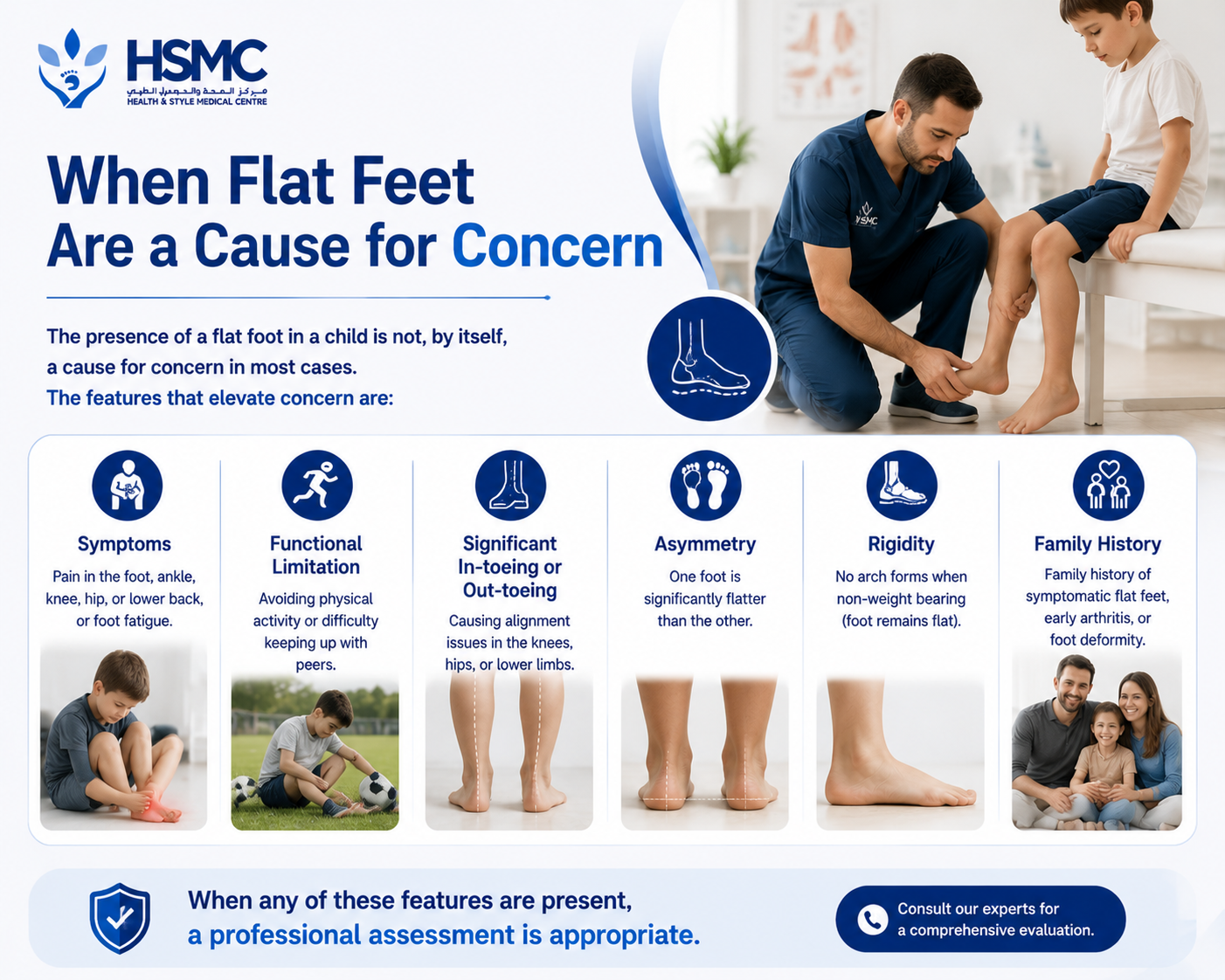
The presence of a flat foot in a child is not, by itself, a cause for concern in most cases. The
features that elevate concern are:
Symptoms. Flat feet that cause pain — in the foot, ankle, knee, hip, or lower back — warrant
assessment. While many children with flat feet are entirely asymptomatic, those who
experience pain with walking, running, or standing for extended periods, or who complain of
foot fatigue, deserve professional evaluation.
Functional limitation. If flat feet are causing a child to avoid physical activity, limit
participation in sport, or walk and run significantly differently from their peers, assessment
is warranted.
Significant in-toeing or out-toeing. Flat feet are often associated with a valgus (knocked
knee) posture and internal tibial torsion. When the foot rolling inward is driving a significant
alignment problem throughout the lower limb — knees tracking inward, hips compensating
— assessment is appropriate.
Asymmetry. If one foot is significantly flatter than the other, this asymmetry warrants
evaluation — as it may indicate an acquired cause rather than a developmental variation.
Rigidity. As described above, any flat foot that does not form an arch when non-weight
bearing requires specialist assessment.
Family history of foot problems. A strong family history of symptomatic flat feet, early
osteoarthritis of the foot and ankle, or adult foot deformity is relevant context that may
lower the threshold for intervention.
The Role of Footwear and Surfaces
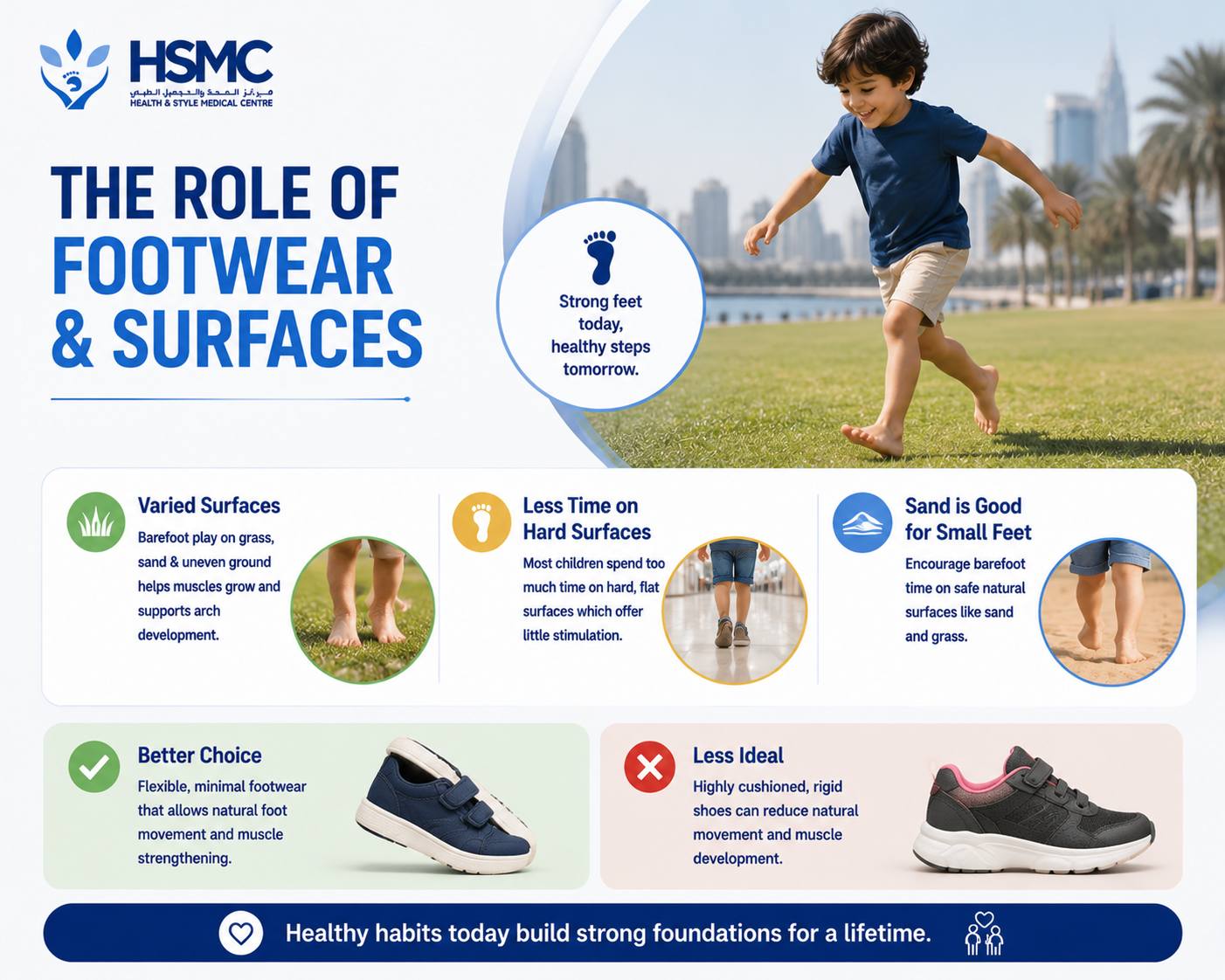
A factor that is particularly relevant in Abu Dhabi’s context is the type of surfaces children
spend their time on. Children in the UAE — like children in most modern urban environments
— spend the majority of their time on flat, hard, smooth surfaces: tiled floors at home,
school corridors, shopping malls. They spend relatively little time barefoot on varied, natural
surfaces.
Research on arch development consistently identifies barefoot walking on varied surfaces —
grass, sand, uneven ground — as a positive stimulus for foot muscle development and arch
maturation. The sensory feedback from varied surfaces stimulates the intrinsic foot muscles
and promotes the neuromuscular development that supports arch formation.
Abu Dhabi’s sand — paradoxically, given its abundance — is rarely experienced barefoot by
most children, who spend their outdoor time in shoes on paved surfaces. Encouraging
barefoot play on appropriate surfaces, including grass and sand, is a simple and evidence
supported measure for supporting foot development in young children.
Footwear also matters. Highly cushioned, rigid shoes that support the arch passively do not
stimulate the foot muscles to develop their own support capacity. Flexible, minimal footwear
that allows the foot to move and respond naturally is generally preferable for typical foot
development in young children, within the bounds of appropriate protection and safety.
When Physiotherapy Helps
Physiotherapy is not indicated for all children with flat feet. It is most clearly beneficial in the
following situations:
Symptomatic flat feet. When flat feet are causing pain, fatigue, or functional limitation,
physiotherapy assessment identifies the specific biomechanical drivers and provides a
targeted treatment programme. This typically includes foot and ankle strengthening
exercises, gait retraining, and footwear and activity advice.
Significant lower limb alignment problems. When flat feet are contributing to a valgus
alignment pattern throughout the lower limb — knees tracking inward during walking or
running, hip compensations developing — physiotherapy addresses the alignment problem
comprehensively, not just the foot in isolation.
Children with neuromuscular conditions. Children with hypermobility syndrome, cerebral
palsy, Down syndrome, and other conditions associated with reduced muscle tone or
ligamentous laxity frequently have flat feet that benefit from targeted physiotherapy
intervention.
Older children and adolescents with persistent symptomatic flat feet. While watchful
waiting is appropriate for young children with asymptomatic flexible flat feet, older children
(eight and above) with persistent symptomatic flat feet and no sign of spontaneous
improvement benefit from active physiotherapy management
What About Orthotics?
Orthotics — insoles designed to support the foot arch — are frequently prescribed for
children with flat feet in Abu Dhabi, sometimes as a first-line intervention without
physiotherapy assessment. This approach is not supported by the current evidence.
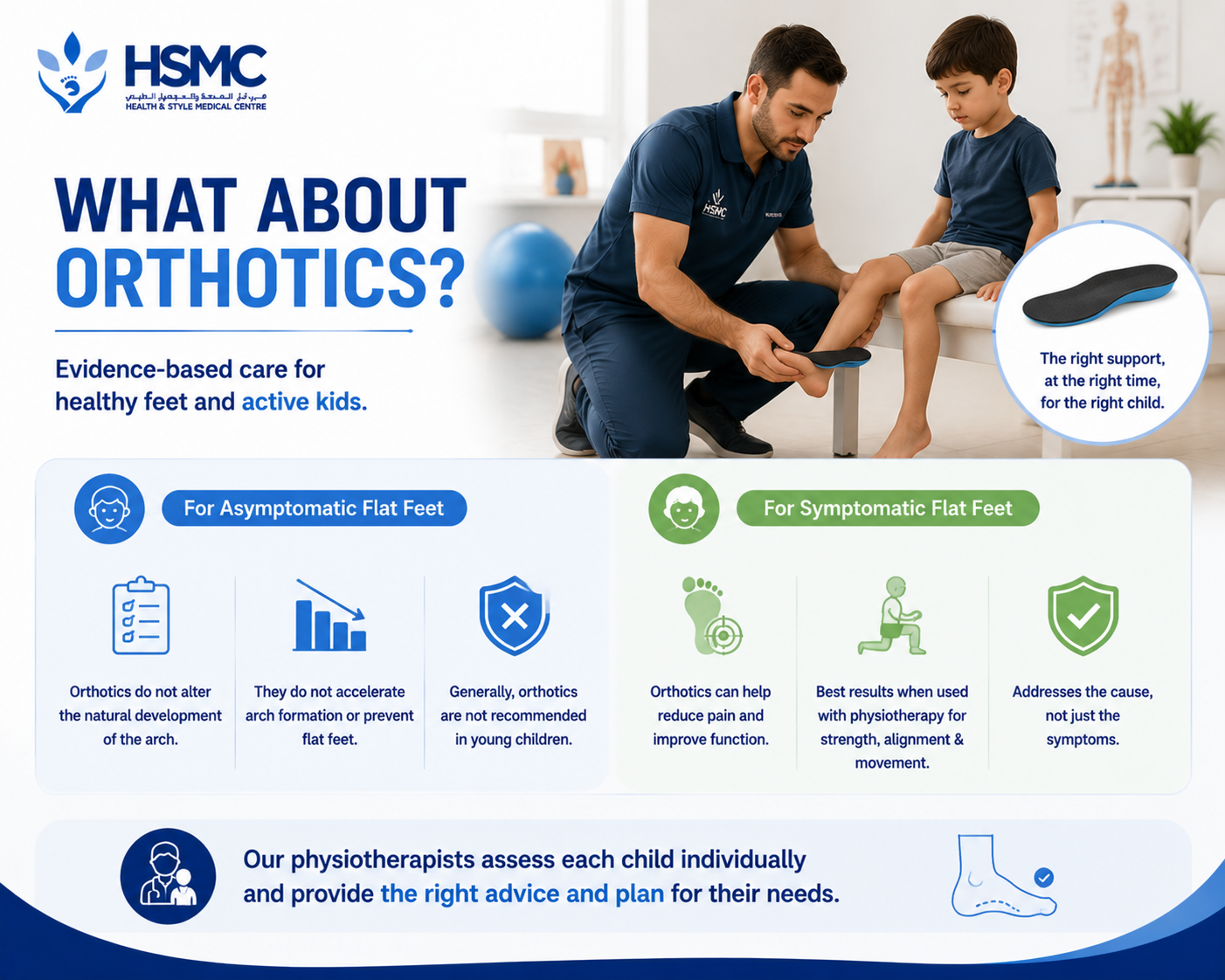
The research on orthotic use for asymptomatic flexible flat feet in children consistently
shows that orthotics do not alter the natural history of arch development — they do not
accelerate arch formation or prevent the progression of flat feet in typical development. For
asymptomatic flat feet in young children, orthotics are generally not recommended.
For symptomatic flat feet, orthotics may play a role in reducing pain and improving function
— but they work best as part of a comprehensive physiotherapy programme that also
addresses muscle strength, alignment, and movement patterns. Orthotics that support the
arch passively, without the muscle strengthening that develops active support, may reduce
pain in the short term while doing little to address the underlying cause.
Our physiotherapists assess each child individually and provide evidence-based guidance
on whether orthotics are appropriate, what type would be most beneficial, and how they
integrate with the overall management plan.
Practical Guidance for Abu Dhabi Parents
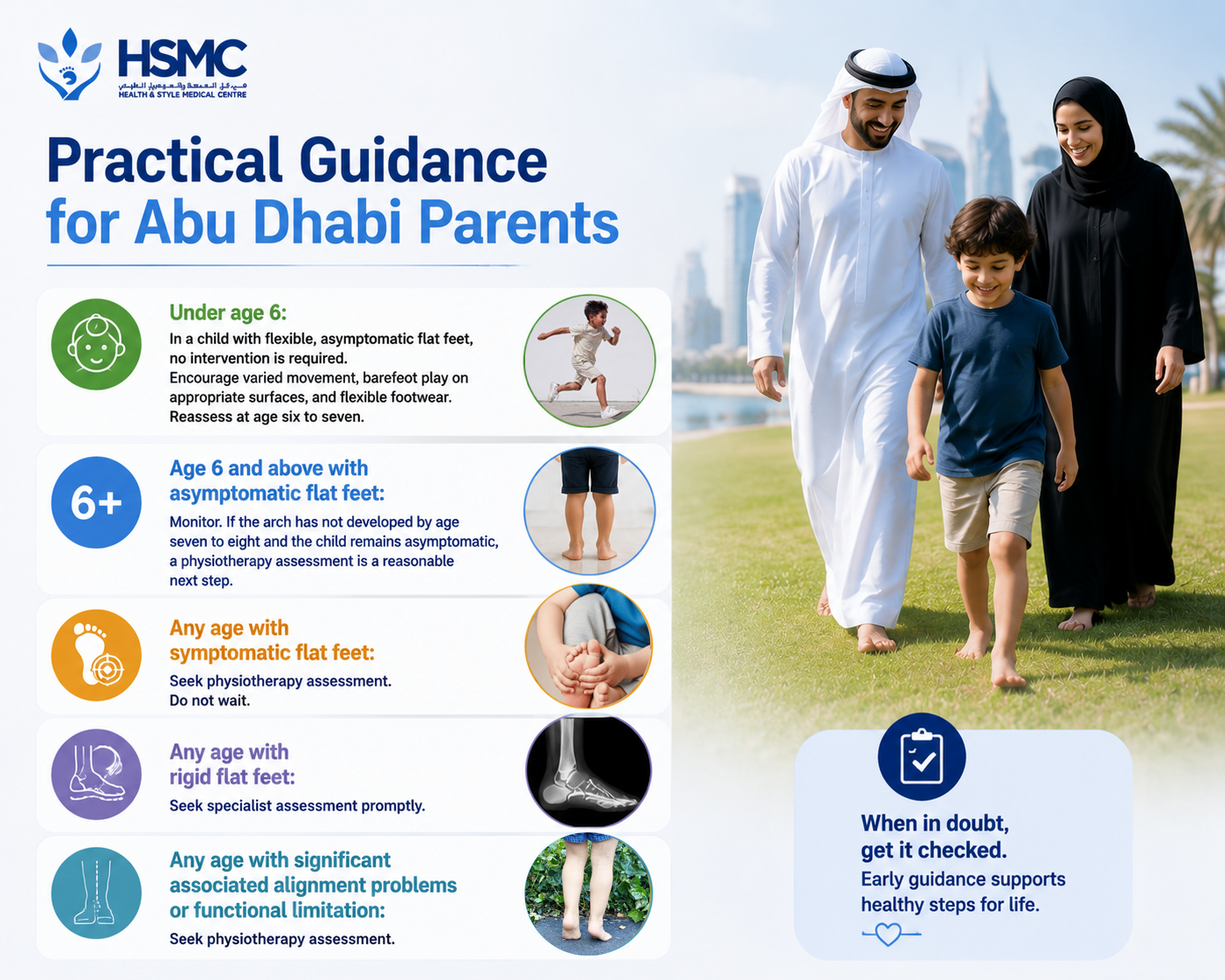
Under age 6: In a child with flexible, asymptomatic flat feet, no intervention is required.
Encourage varied movement, barefoot play on appropriate surfaces, and flexible footwear.p
Reassess at age six to seven.
Age 6 and above with asymptomatic flat feet: Monitor. If the arch has not developed by
age seven to eight and the child remains asymptomatic, a physiotherapy assessment to
evaluate lower limb alignment and foot muscle strength is a reasonable next step.
Any age with symptomatic flat feet: Seek physiotherapy assessment. Do not wait.
Any age with rigid flat feet: Seek specialist assessment promptly.
The Health & Style Paediatric Physiotherapy Service
At Health & Style Medical Centre, our paediatric physiotherapy team assesses and treats
children with flat feet, foot pain, gait problems, and lower limb alignment issues across all
age groups.
We provide clear, honest, evidence-based guidance to parents — distinguishing
the flat feet that require observation from those that genuinely need intervention, and
ensuring that every child receives the most appropriate level of care for their specific
presentation.
We understand that the question “does my child need treatment?” is one that parents want
answered clearly and honestly. We will always give you that answer — and explain the
reasoning behind it.
Book your child’s foot and gait assessment at Health & Style Medical Centre, Abu
Dhabi.