

There is a conversation that happens thousands of times a year across Abu Dhabi — in
postnatal check-up appointments, in mother-and-baby groups, in hushed exchanges
between friends. A new mother mentions that she leaks a little when she laughs or sneezes.
Or that she has pelvic pressure and heaviness that does not feel right. Or that intimacy is
painful since giving birth. Or that her lower back never fully recovered after pregnancy.
The response she receives — from well-meaning friends, from busy doctors, sometimes
even from healthcare professionals — is almost always some version of the same thing:
“That’s normal after having a baby. It will improve with time. Just do your Kegels.”
This response is, in many cases, both incomplete and actively unhelpful. These symptoms
are common — but common is not the same as normal, and they are absolutely not
something every woman must simply accept as an inevitable consequence of motherhood.
Pelvic floor physiotherapy is one of the most evidence-based, most effective, and most
underutilised areas of women’s healthcare. In many European countries — France, notably —
specialised perineal rehabilitation is offered to all women postnatally as a standard
component of postnatal care. In Abu Dhabi, awareness is growing — but many women
remain unaware that this specialist service exists, or that their symptoms are treatable.
This article is for every woman in Abu Dhabi who has experienced symptoms they were told
to accept. It explains what the pelvic floor is, what happens to it during pregnancy and
childbirth, what symptoms indicate it needs professional attention, and what pelvic floor
physiotherapy actually involves.
What Is the Pelvic Floor?
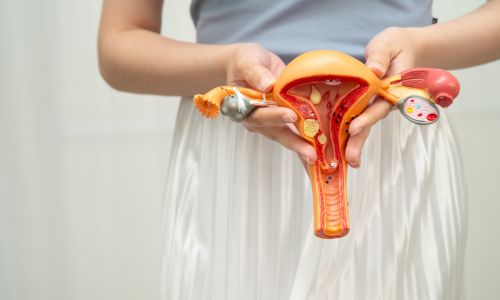
The pelvic floor is a group of muscles, ligaments, and connective tissue that forms the base
of the pelvis. It functions as a dynamic hammock, supporting the pelvic organs — the
bladder, uterus, and bowel — maintaining continence, contributing to sexual function, and
working in coordination with the deep abdominal muscles and diaphragm to stabilise the
spine and pelvis.
The pelvic floor muscles must be capable of both contraction — to maintain continence and
provide support — and relaxation — to allow urination, defecation, penetration, and
childbirth. A healthy pelvic floor does both on demand, without conscious effort.
Pregnancy and childbirth place extraordinary demands on this system.
What Pregnancy and Childbirth Do to the Pelvic Floor
During pregnancy, the pelvic floor muscles support an increasing load as the uterus, baby,
placenta, and amniotic fluid grow — eventually bearing a weight of several kilograms
continuously for months. The hormonal changes of pregnancy — particularly the effects of
relaxin, which increases ligamentous laxity throughout the body — further alter the
mechanical environment of the pelvic floor. The growing uterus also changes the
biomechanics of the lumbar spine and pelvis, affecting the coordination between the pelvic
floor, deep abdominals, and diaphragm.
During vaginal birth, the pelvic floor muscles and supporting tissues undergo extreme
stretching and compression as the baby descends through the birth canal. The levator ani
muscle group — the primary structural support of the pelvic floor — stretches to several
times its resting length during delivery. Perineal tears and episiotomy add further tissue
disruption. Research using MRI has demonstrated that levator ani muscle injury — partial or
complete tears — is present in approximately 30% of women after vaginal delivery, though
most are unaware of it.
After caesarean section, while the pelvic floor is spared the trauma of vaginal delivery, the
nine months of pregnancy have still placed significant demands on the system — and the
surgical wound to the abdominal wall affects the coordination of the deep abdominal and
pelvic floor muscles, which must now function around scar tissue.
The Symptoms That Tell You Your Pelvic Floor Needs Help
Stress urinary incontinence. Leaking urine with any increase in abdominal pressure —
coughing, sneezing, laughing, jumping, running, or lifting — is the most common postnatal
pelvic floor symptom. It affects up to 30% of women in the year after delivery. It is not
normal. It is a sign that the pelvic floor is not providing adequate support for the bladder
during increases in intra-abdominal pressure.
Urgency urinary incontinence. A sudden, strong urge to urinate that is difficult to defer,
sometimes resulting in leakage before reaching the toilet. This often develops when the
bladder becomes hypersensitive after delivery.
Pelvic organ prolapse symptoms. A sensation of heaviness, bulging, or “something
coming down” in the vaginal area. Pelvic organ prolapse — where one or more of the pelvic
organs descends toward or through the vaginal opening — affects a significant proportion of
women after childbirth and is dramatically undertreated. Symptoms are typically worse at
the end of the day or after prolonged standing.
Painful intercourse. Dyspareunia — pain during or after intercourse — is reported by up to
40% of women in the months after delivery. It may arise from perineal scar tissue, pelvic
floor muscle hypertonicity (excessive tension rather than weakness), hormonal changes, or
a combination of all three.
Diastasis recti. Separation of the rectus abdominis muscles at the midline — a condition
that occurs to varying degrees in the majority of pregnant women — affects not only the
appearance of the abdomen but the functional integrity of the abdominal wall and its
coordination with the pelvic floor.
Pelvic girdle and lower back pain. Pain in the sacroiliac joints, pubic symphysis, or lower
back that persists after delivery — often dismissed as “normal postpartum aching” — is
frequently driven by pelvic floor dysfunction and altered lumbopelvic biomechanics that
physiotherapy can specifically address.
Why “Just Do Your Kegels” Is Not Enough
The universal recommendation of Kegel exercises — repeated contractions of the pelvic
floor — is not wrong, but it is insufficient for several important reasons.
Not all pelvic floor problems involve weakness. A significant proportion of women with
postnatal pelvic floor symptoms have pelvic floor hypertonicity — a pelvic floor that is
overactive, too tight, and unable to relax properly — rather than, or in addition to, weakness.
Kegel exercises in a hypertonic pelvic floor make the problem worse, not better. A
physiotherapy assessment is essential to distinguish between these presentations before
any exercise programme is prescribed.
Kegels are frequently performed incorrectly. Research consistently shows that a large
proportion of women who attempt Kegel exercises without guidance are performing them
incorrectly — often bearing down rather than lifting, or contracting the wrong muscles.
Performing the wrong contraction repeatedly does not improve pelvic floor function.
The pelvic floor does not function in isolation. Effective pelvic floor rehabilitation requires
attention to breathing mechanics, deep abdominal coordination, posture, and the
integration of the pelvic floor into whole-body movement. A programme of isolated pelvic
floor contractions addresses only a small part of this complex system.
What Pelvic Floor Physiotherapy Actually Involves
At Health & Style Medical Centre, our women’s health physiotherapists provide
comprehensive, evidence-based assessment and treatment of postnatal pelvic floor
dysfunction in a private, respectful, and compassionate clinical environment.
Initial assessment:
Our assessment begins with a detailed history — understanding the delivery, any
complications, current symptoms, and functional limitations. We assess posture, breathing
mechanics, abdominal wall integrity, and — with the patient’s full consent — an internal
pelvic floor assessment to evaluate muscle tone, strength, coordination, and the presence
of any structural changes.
This internal assessment is the gold standard for evaluating pelvic floor function and cannot
be replaced by external observation or symptom questionnaires alone. It is performed
gently, respectfully, and only with informed consent at every stage.
Treatment:
Treatment is individualized to each patient’s specific findings. It may include:
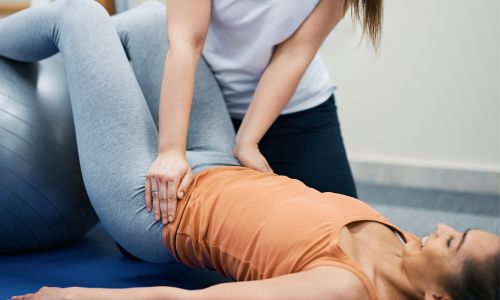
Manual therapy to release hypertonic pelvic floor muscles, address scar tissue, and
improve the mobility of the sacroiliac joints and lumbar spine
Specific pelvic floor muscle retraining — teaching correct activation, relaxation, and
coordination rather than simply prescribing repetitions of Kegel exercises
Breathing retraining to restore the coordinated function of the diaphragm, deep
abdominals, and pelvic floor
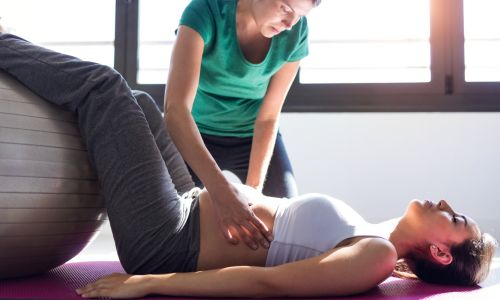
Abdominal wall rehabilitation for diastasis recti
Progressive functional exercise to integrate the pelvic floor into the movement demands
of daily life — including lifting, exercise, and return to sport
Education on bladder and bowel habits, posture during toileting, and activity
modification
Timeline:
Most women begin to notice meaningful improvement within four to six sessions of pelvic
floor physiotherapy. The total duration of treatment varies depending on the severity of
symptoms and the time elapsed since delivery — earlier intervention generally produces
faster outcomes.
When Is the Right Time to Seek Help?
The answer is: any time. It is never too early and it is never too late.
Prenatally, pelvic floor physiotherapy can prepare the pelvic floor for the demands of
labour — building strength, improving coordination, and teaching the relaxation techniques
that facilitate delivery.
In the early postnatal period (six weeks to three months), physiotherapy addresses the
acute sequelae of delivery — scar tissue, muscle weakness, pain, and the re-establishment
of normal pelvic floor function.
Months or years after delivery, physiotherapy remains highly effective for women who
were never treated postnatally and are continuing to live with symptoms. Leaking, prolapse
symptoms, and painful intercourse are treatable regardless of how long they have been
present.
The Health & Style Women’s Health Physiotherapy Service
At Health & Style Medical Centre, our women’s health physiotherapy service is provided by
specialist physiotherapists with advanced training in pelvic floor assessment and
rehabilitation. We provide a confidential, compassionate clinical environment in which Abu
Dhabi’s mothers can discuss their symptoms and receive the expert care they deserve.
Every woman who has given birth deserves a postnatal physiotherapy assessment. Not
because something is necessarily wrong — but because understanding the state of her
pelvic floor and receiving evidence-based guidance is a fundamental component of
postnatal health care that too many women are currently denied.
Book your women’s health physiotherapy assessment at Health & Style Medical
Centre, Abu Dhabi.