

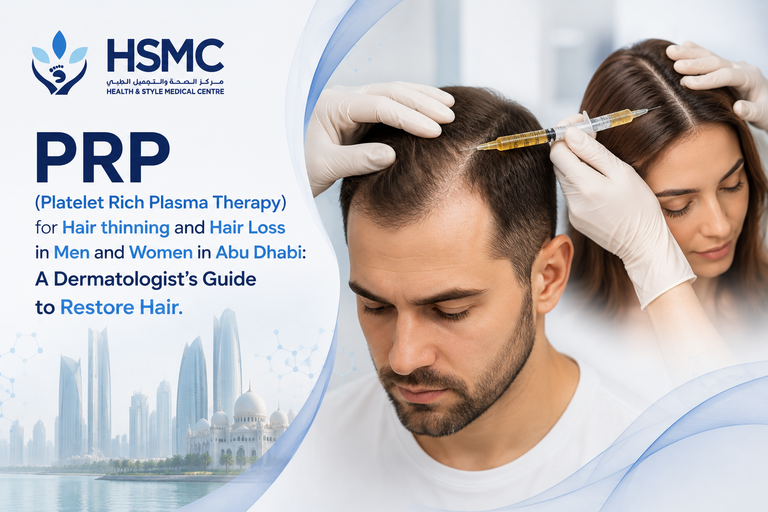
Hair thinning and excessive shedding can affect both men and women, and finding the right treatment starts with understanding why the hair loss is happening.
One treatment that has gained considerable attention is platelet-rich plasma (PRP) therapy. PRP uses components derived from your own blood, which a healthcare professional injects into targeted areas of the scalp. Healthcare providers increasingly use PRP as a non-surgical treatment for certain types of hair loss, particularly androgenetic alopecia, commonly known as male or female pattern hair loss.
If you are considering PRP for hair loss in Abu Dhabi, this dermatologist’s guide explains how PRP works, who may benefit, what happens during treatment, potential side effects, expected results, and why a professional hair-loss assessment should come first.
What Is PRP (Platelet Rich Plasma Therapy) Hair Treatment?
Platelet-rich plasma (PRP) therapy is a treatment prepared from a small sample of the patient’s own blood.
The blood is placed in a centrifuge, which separates its different components and produces plasma with a concentrated platelet component. The prepared PRP is then injected into selected areas of the scalp.
Platelets contain proteins and growth factors involved in tissue repair and cell signaling. In hair-loss treatment, PRP is used with the aim of supporting the environment around existing hair follicles and encouraging healthier hair growth.
Because PRP is prepared from the patient’s own blood, it is known as an autologous treatment.
How Does PRP for Hair Loss Work?
PRP is not a hair transplant and does not create completely new hair follicles. Instead, treatment is generally intended to support existing follicles that have become weaker or miniaturized.
Research suggests that PRP may help improve outcomes such as:
- Hair density
- Hair thickness
- Hair count
- Overall appearance of thinning areas
The strongest body of research currently relates to androgenetic alopecia, or pattern hair loss.
A systematic review and meta-analysis of randomized controlled trials published in the Journal of Cutaneous Medicine and Surgery found that PRP produced statistically significant improvements in hair density at three and six months compared with placebo.
Other systematic reviews have similarly reported improvements in hair density and thickness, although treatment techniques and outcomes vary between studies.
This variation is important. PRP preparation methods, platelet concentrations, injection techniques, number of sessions, treatment intervals, and patient characteristics are not identical across clinics or clinical studies.
For this reason, PRP should be viewed as an individualized medical treatment rather than a guaranteed solution for every form of hair loss.
Who Is a Good Candidate for PRP Hair Treatment?
PRP may be considered for men and women experiencing androgenetic alopecia, particularly when active hair follicles are still present.
Potential candidates can include people experiencing:
- Male pattern hair loss
- Female pattern hair loss
- Gradual hair thinning
- Reduced hair density
- Early-stage follicular miniaturization
However, seeing hair falling out does not automatically mean PRP is the right treatment.
Hair loss can have many causes, including nutritional deficiencies, hormonal changes, thyroid disorders, stress, certain medications, inflammatory scalp conditions, autoimmune diseases and genetic factors.
A dermatologist should therefore determine the cause before recommending treatment.
Why a Dermatologist Should Diagnose Hair Loss Before PRP
One of the most important steps in treating hair loss is getting the diagnosis right.
Two patients can appear to have similar thinning while actually having very different underlying conditions. A treatment that works for genetic pattern hair loss may not work for hair loss caused by another medical or scalp condition.
During a dermatology consultation, your doctor may assess:
- Your pattern of hair loss
- When the shedding or thinning began
- Family history of hair loss
- Scalp and hair-follicle condition
- Current medications
- Recent illnesses or significant stress
- Diet and nutritional factors
- Relevant medical history
Depending on the findings, your dermatologist may recommend additional investigations, such as blood tests. This assessment helps your dermatologist determine whether PRP hair treatment is appropriate for you or whether they should consider another treatment first.
What Happens During a PRP Hair Treatment Session?
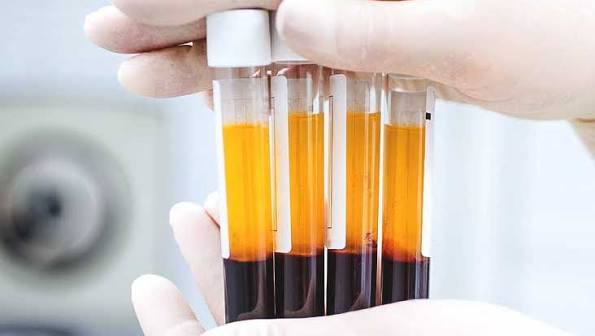
Although protocols vary, a typical PRP hair treatment in Abu Dhabi involves several stages.
Blood Collection
A healthcare professional draws a small amount of blood, similar to a routine blood test.
- Centrifugation
The healthcare professional places the blood in a centrifuge, which spins rapidly to separate its components.
- PRP Preparation
Healthcare professional collects the platelet-rich portion and prepares it for treatment.
- Scalp Treatment
The healthcare professional injects the PRP with small needles into targeted areas of the scalp where hair thinning has occurred.
The healthcare professional usually completes the procedure in the clinic without surgery.
Does PRP Hair Treatment Hurt?
Patients may experience mild discomfort as the healthcare professional makes multiple small injections across the treatment area.
Sensitivity varies from person to person. Your healthcare professional can discuss measures used by the clinic to make the procedure more comfortable.
Temporary scalp tenderness after treatment can also occur.
How Many PRP Sessions Are Needed for Hair Loss?
Healthcare professionals do not follow a single universally standardized PRP protocol for hair loss.
The American Academy of Dermatology describes an example treatment schedule involving monthly injections for the first three months followed by additional treatments every three to six months.
However, your dermatologist should determine your treatment schedule based on factors such as:
- Diagnosis
- Degree of thinning
- Response to treatment
- Treatment goals
- Other hair-loss therapies being used
Your dermatologist may also recommend maintenance sessions because genetic hair loss generally progresses over time.
When Can You Expect Results From PRP?
PRP hair treatment does not produce immediate hair growth.
Hair follicles operate through natural growth cycles, so visible changes take time.
Some patients may first notice reduced shedding, followed by improvements in hair thickness or density over the following months.
The American Academy of Dermatology notes that PRP may help reduce hair loss within a few months, after which some patients notice thickening or regrowth.
Individual results can vary considerably.
Factors affecting the response may include:
- Type of hair loss
- Severity and duration of hair loss
- Number of functioning follicles
- Age and genetics
- Overall health
- Treatment protocol
- Consistency with recommended sessions
- Use of other evidence-based treatments
Your dermatologist can provide a more realistic expectation after examining your scalp and establishing the underlying diagnosis.
Is PRP Effective for Hair Loss?
Clinical evidence for PRP is encouraging, particularly for androgenetic alopecia.
A meta-analysis of nine randomized controlled trials involving 238 patients found significant improvements in hair density at three and six months compared with placebo.
Another systematic review of clinical trials found improvements in hair follicles, thickness and density among selected patients receiving autologous PRP.
However, the scientific literature also highlights an important limitation: PRP protocols vary significantly between studies. Consequently, patients should be cautious of claims promising guaranteed regrowth or identical outcomes for everyone. Healthcare professionals may consider PRP as one potential component of an individualized hair-loss management plan.
PRP vs Minoxidil: Which Is Better?
PRP and minoxidil work differently, so healthcare professionals may use them as complementary rather than competing treatments.
Healthcare professionals commonly use minoxidil to treat pattern hair loss, while they administer PRP through injections in a clinical setting.
A recent systematic review and meta-analysis comparing PRP with topical minoxidil found no statistically significant difference between the treatments for hair density, although patient satisfaction was higher in the PRP groups.
Research has also investigated PRP combined with minoxidil, with some studies reporting better outcomes from combination therapy than minoxidil alone.
The appropriate option depends on your diagnosis, medical history, treatment preferences and previous response to therapy.
Never discontinue or change prescribed hair-loss medication simply to start PRP without discussing it with your treating doctor.
PRP vs Hair Transplant
Both are fundamentally different treatments.
PRP therapy aims to support existing follicles and improve thinning hair where suitable follicles remain.
A hair transplant, meanwhile, surgically relocates hair follicles from donor areas to areas affected by hair loss.
Healthcare professionals may therefore consider PRP for patients who are not ready for surgery, have earlier-stage hair thinning, or want to include PRP as part of a broader hair-restoration plan.
The American Academy of Dermatology also notes that healthcare professionals may use PRP alongside hair transplantation in some cases.
A dermatologist or hair-restoration specialist can determine which approach is appropriate after assessing the degree and pattern of hair loss.
Are There Side Effects From PRP Hair Treatment?
PRP is a minimally invasive treatment, but patients may still experience some side effects.
Reported temporary effects can include:
- Scalp tenderness or pain
- Redness
- Mild swelling
- Minor bleeding at injection sites
- Itching
- Bruising
Systematic reviews of PRP for androgenetic alopecia have generally reported mild and temporary adverse effects, with serious treatment-related complications uncommon in the published clinical studies.
Because PRP involves blood collection and injections, healthcare professionals should follow appropriate medical and infection-control standards throughout the procedure.
Your dermatologist should also review your medical history before treatment to determine whether PRP is suitable for you.
Can PRP Completely Restore Lost Hair?
The treatment depends on the presence and condition of existing hair follicles.
Areas with severely miniaturized or non-functional follicles may respond differently to treatment than areas with earlier-stage thinning.
That is one reason early dermatological assessment of progressive hair loss can be valuable.
The objective may be to improve density and thickness, slow visible progression, or complement other hair-loss treatments rather than restore every lost hair.
Can Women Have PRP for Hair Loss?
Yes. PRP has been studied in both men and women with pattern hair loss.
Women experiencing widening of the hair part, reduced ponytail volume or diffuse thinning should nevertheless undergo an appropriate assessment before treatment.
Female hair loss can have multiple contributing factors, including:
- Genetic predisposition
- Iron deficiency
- Thyroid conditions
- Hormonal changes
- Pregnancy and postpartum changes
- Menopause
- Significant physical or emotional stress
- Certain medications
Identifying these factors is essential before deciding whether PRP is appropriate.
Can PRP Be Combined With Other Hair-Loss Treatments?
In some patients, yes.
Dermatologists may use PRP as part of a broader treatment strategy rather than as a standalone procedure.
Depending on the diagnosis, this could include treatments such as minoxidil or other dermatologist-recommended therapies.
Research evaluating PRP combined with minoxidil has reported potentially improved outcomes compared with minoxidil alone, although the quality of available evidence varies.
Healthcare professionals should therefore select treatment combinations based on each patient’s individual diagnosis rather than follow a standard treatment package.
Choosing PRP Hair Treatment in Abu Dhabi
If you are searching for PRP for hair loss in Abu Dhabi, focus on the quality of the medical assessment rather than simply comparing treatment packages or the number of PRP sessions offered.
Before proceeding, consider asking:
Who will diagnose my hair loss?
Hair loss should ideally be evaluated by an appropriately qualified healthcare professional before treatment.
What type of hair loss do I have?
PRP is not equally appropriate for every condition.
What results are realistic for me?
Be cautious about guaranteed hair-regrowth claims.
How many sessions are being recommended and why?
Your treatment plan should reflect your individual diagnosis and response.
How will progress be measured?
Standardized photographs and follow-up assessments can help objectively evaluate changes.
Are other treatments appropriate?
PRP may be one component of a wider treatment plan.
Frequently Asked Questions About PRP for Hair Loss in Abu Dhabi
Is PRP good for hair loss?
Is PRP suitable for both men and women?
How long does PRP take to work for hair loss?
How many PRP sessions do I need?
Is PRP permanent?
Is there downtime after PRP?
Can PRP regrow hair on a completely bald scalp?
Where can I get PRP for hair loss in Abu Dhabi?
Take the First Step Towards Understanding Your Hair Loss
Hair loss treatment should begin with a diagnosis—not a procedure.
PRP has emerged as a promising non-surgical option for certain patients with pattern hair loss, and clinical research suggests it can improve hair density and thickness in appropriately selected patients. However, outcomes vary, and PRP is not the right solution for every cause or stage of hair loss.
If you are experiencing hair thinning, excessive shedding or pattern hair loss in Abu Dhabi, consider booking a dermatology consultation to identify the cause and discuss whether PRP or another evidence-based treatment is appropriate for you.

- Tags:
- hairloss