

Of all the chronic pain conditions we manage at Health & Style Medical Centre, fibromyalgia
is perhaps the one that causes the most frustration — not because it cannot be helped, but
because of how long most patients spend on the journey before they receive the right help.
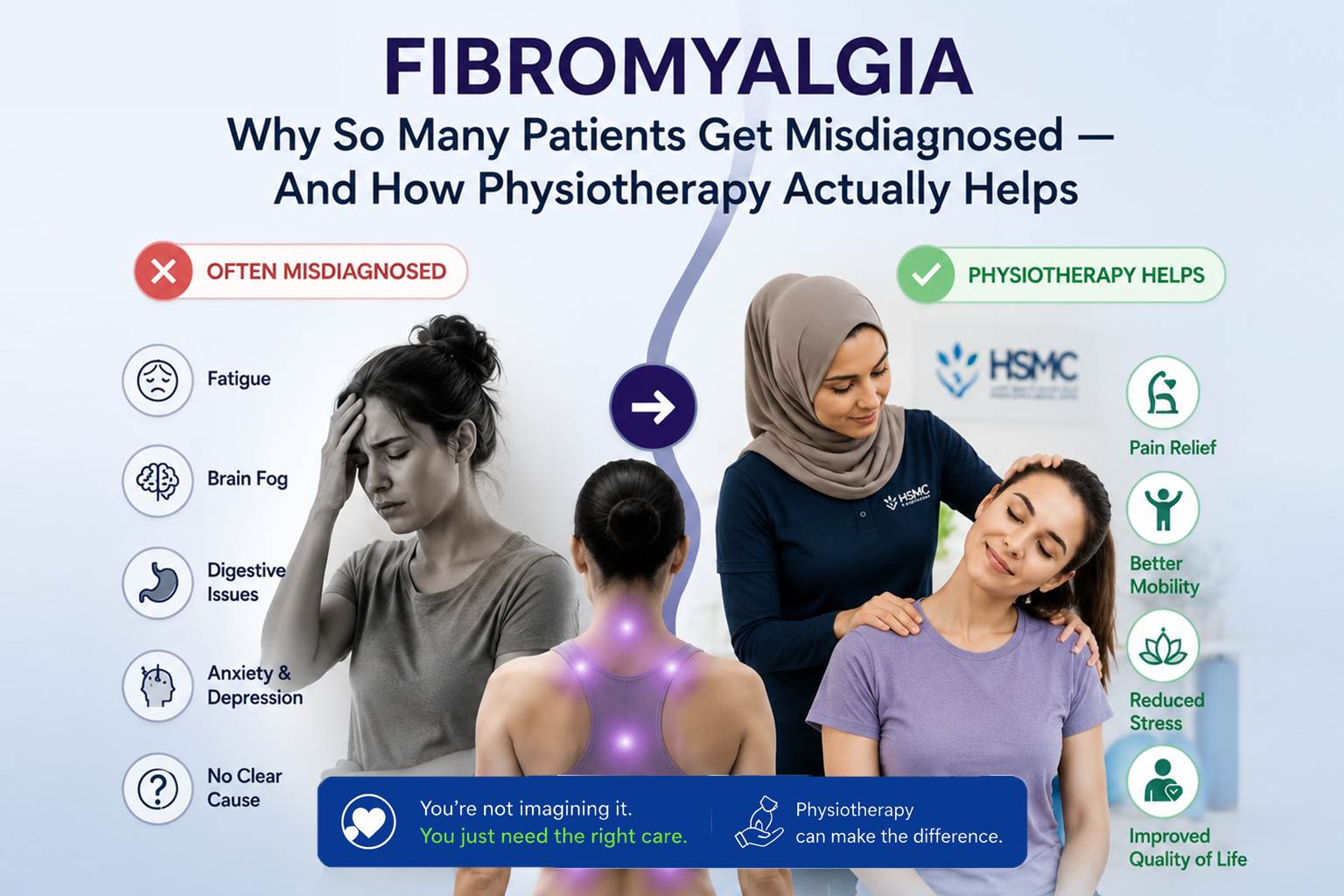
The typical fibromyalgia patient in Abu Dhabi has spent months, sometimes years, seeing
multiple specialists. They have had blood tests, MRI scans, X-rays, and nerve conduction
studies — all of which come back normal, or with findings insufficient to explain the degree
of pain and disability they are experiencing. They have been told, explicitly or implicitly, that
there is nothing physically wrong. Some have been referred for psychiatric assessment.
Many have been dismissed, disbelieved, or have begun to doubt their own experience.
They are not imagining their pain. Fibromyalgia is a real, recognised, neurobiological
condition. And it is one that responds meaningfully to the right treatment — treatment that
physiotherapy is uniquely well-placed to provide.
This article explains what fibromyalgia is, why it is so frequently misdiagnosed in Abu Dhabi,
and how a physiotherapy approach grounded in modern pain science produces genuine,
lasting improvements for patients who have often been told little can be done.
What Is Fibromyalgia?
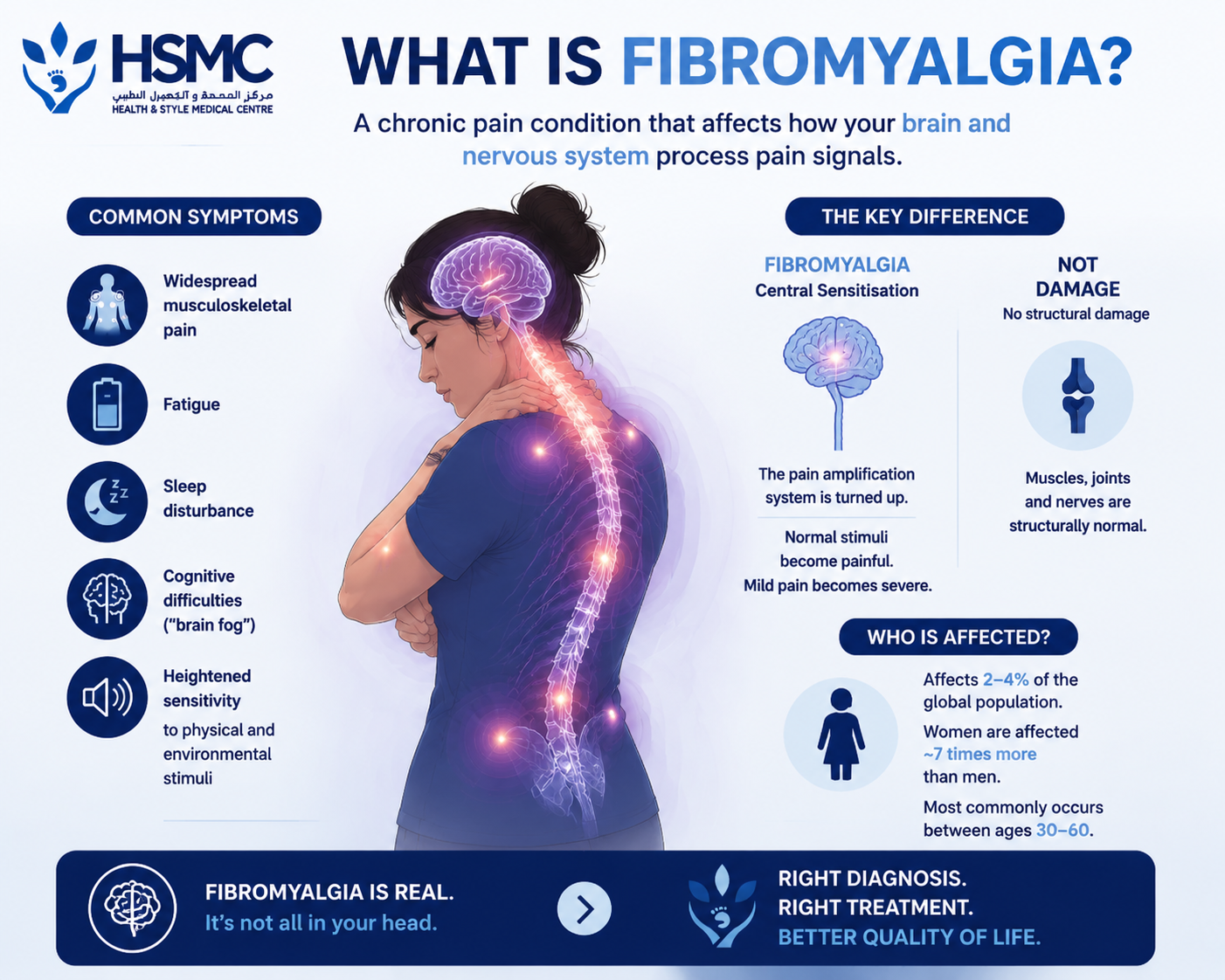
Fibromyalgia is a chronic pain condition characterised by widespread musculoskeletal pain,
fatigue, sleep disturbance, cognitive difficulties, and heightened sensitivity to physical and
environmental stimuli. It affects approximately 2–4% of the global population, with a
significant female predominance (women are affected approximately seven times more
frequently than men). It can occur at any age but most commonly presents between the
ages of 30 and 60.
The defining feature of fibromyalgia is not a structural abnormality in muscles, joints, or
nerves — it is a disturbance in how the central nervous system processes pain signals. In
fibromyalgia, the pain amplification systems of the brain and spinal cord are dysregulated —
turned up to a level where stimuli that would not normally produce pain become painful, and
stimuli that would normally produce mild pain become severe. This process is called central
sensitisation.
Understanding fibromyalgia as a central sensitisation syndrome — rather than a disease of
damaged muscles or joints — is the conceptual shift that transforms both diagnosis and
treatment.
The Diagnostic Challenge
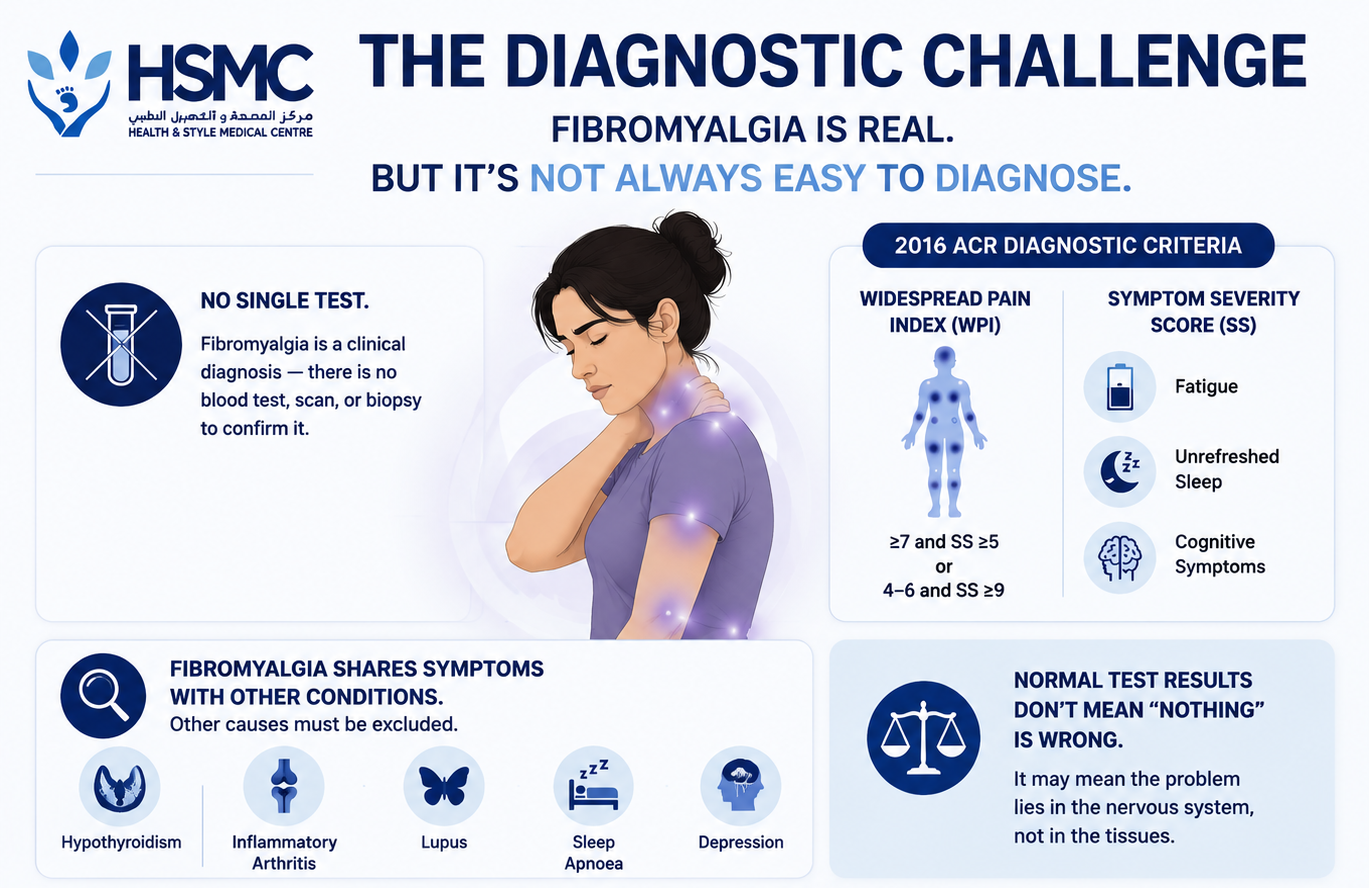
Fibromyalgia is a clinical diagnosis — there is no blood test, imaging finding, or biopsy that
confirms it. Diagnosis is based on symptom criteria: widespread pain present for at least
three months, fatigue, sleep disturbance, and cognitive symptoms, with no other condition
that better explains the presentation.
The 2016 American College of Rheumatology diagnostic criteria — the current clinical
standard — assess the widespread pain index (the number of body areas in which pain has
been present over the past week) and the symptom severity score (assessing fatigue,
waking unrefreshed, and cognitive symptoms). A diagnosis of fibromyalgia requires a
widespread pain index of seven or more with a symptom severity score of five or more, or a
widespread pain index of four to six with a symptom severity score of nine or more.
The challenge is that fibromyalgia shares many features with other conditions —
hypothyroidism, inflammatory arthritis, lupus, sleep apnoea, and depression — and these
must be excluded before the diagnosis is confirmed. In a healthcare environment that
prioritises investigation-driven diagnosis, the absence of positive findings on extensive
testing can be misinterpreted as the absence of a real condition — rather than as evidence
that the problem lies in the nervous system rather than the peripheral tissues.
In Abu Dhabi, several additional factors complicate diagnosis. Cultural norms around
expressing pain and seeking mental health support mean that the psychological co
morbidities frequently associated with fibromyalgia — anxiety, depression, post-traumatic
stress — may be underreported or underrecognised. Language barriers in a multicultural
healthcare environment can make the nuanced symptom description that fibromyalgia
diagnosis requires particularly challenging.
The Symptoms of Fibromyalgia
Understanding the breadth of fibromyalgia’s symptom profile helps explain why diagnosis is
so frequently delayed and why so many specialists are consulted before a clear diagnosis is
reached.
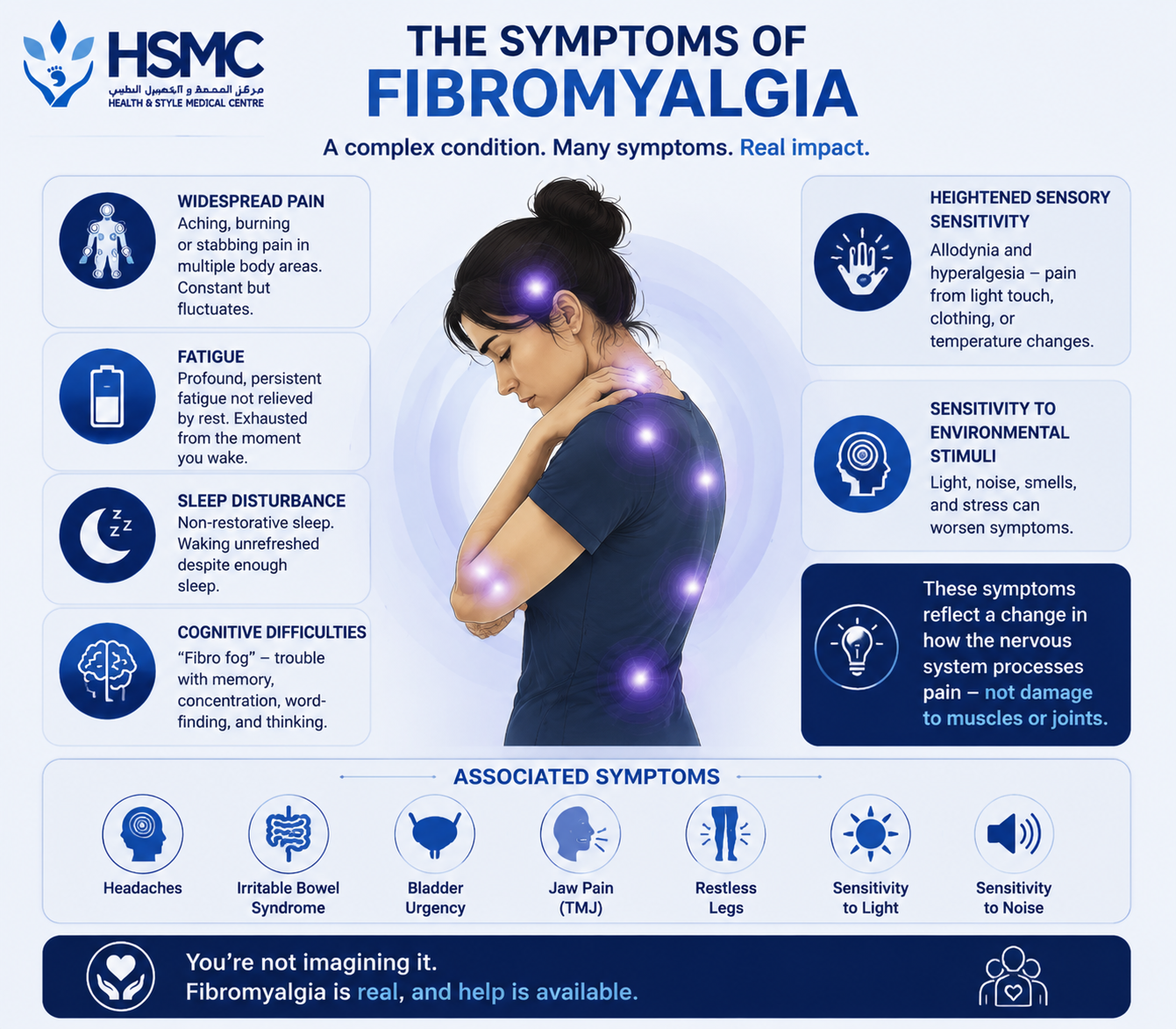
Widespread pain. The hallmark symptom — pain that affects multiple body regions
simultaneously, often described as aching, burning, or stabbing. The pain is typically
constant but fluctuates in intensity, and can be provoked or worsened by physical activity,
stress, cold, poor sleep, and illness.
Fatigue. A profound, persistent fatigue that is not relieved by rest and that significantly
limits daily activity. Fibromyalgia fatigue is qualitatively different from normal tiredness —
patients describe feeling exhausted from the moment they wake, regardless of how long
they have slept.
Sleep disturbance. Non-restorative sleep — waking feeling unrefreshed despite adequate
sleep duration — is nearly universal in fibromyalgia. Many patients also have difficulty
initiating or maintaining sleep. Sleep disturbance both results from and contributes to pain
and fatigue in a self-perpetuating cycle.
Cognitive difficulties. Commonly described as “fibro fog” — difficulties with concentration,
memory, word-finding, and mental processing speed that patients describe as a sense of
mental cloudiness. These cognitive symptoms are often as disabling as the physical pain.
Heightened sensory sensitivity. Allodynia — pain produced by stimuli that would not
normally cause pain, such as light touch, clothing on the skin, or temperature changes —
and hyperalgesia — an amplified pain response to normally painful stimuli — are
characteristic features of central sensitisation in fibromyalgia.
Associated symptoms. Headaches, irritable bowel syndrome, bladder urgency, jaw pain
(temporomandibular dysfunction), restless legs, and sensitivity to light and noise are all
common co-morbidities that reflect the widespread dysregulation of sensory processing in
fibromyalgia
Why Exercise and Physiotherapy Are the Most Evidence-Based Treatments
The evidence base for fibromyalgia treatment is clear on one point above all others: physical
activity and exercise are the most consistently effective treatments available for reducing
pain, improving function, and enhancing quality of life in fibromyalgia — more effective than
any pharmacological intervention.
Multiple systematic reviews and meta-analyses have demonstrated significant
improvements in pain, fatigue, sleep, physical function, and psychological wellbeing from
aerobic exercise, resistance training, and aquatic exercise in fibromyalgia patients. The
effect sizes are clinically meaningful and are maintained at long-term follow-up in patients
who continue exercising.
The mechanism is neurobiological. Exercise promotes the release of endogenous pain
inhibitors — including endorphins, serotonin, and norepinephrine.
It downregulates the central sensitisation that drives fibromyalgia pain. It improves sleep quality, which in turn
reduces pain sensitivity. It addresses the deconditioning that compounds fibromyalgia’s impact on physical function. And it provides a sense of agency and self-efficacy that is profoundly therapeutic in a condition where patients have often felt powerless.
The challenge is that exercise in fibromyalgia is not simple. The condition makes exercise
painful — and the natural response to pain during exercise is to stop. Patients who attempt
to exercise independently often experience post-exertional malaise — a worsening of
symptoms after physical activity that can last hours or days — and conclude that exercise
makes them worse. This experience, without proper guidance, reinforces the avoidance of
activity that accelerates deconditioning and worsens the condition.
This is precisely why physiotherapy-guided exercise — rather than self-directed exercise —
is the appropriate approach for fibromyalgia.
The Graded Exercise Approach
The key to successful exercise rehabilitation in fibromyalgia is graded exposure — beginning
at an intensity well below the patient’s symptom threshold and progressing extremely
gradually, allowing the central nervous system time to adapt and the post-exertional
response to diminish before the load is increased.
This approach runs counter to the natural instinct of motivated patients, who want to push
harder and progress faster. Our physiotherapists provide the clinical guidance and pacing
support that keeps patients progressing at the rate their nervous system can accommodate
— building exercise tolerance gradually over weeks and months, rather than triggering
symptom flares that set the programme back.
A typical graded exercise programme for fibromyalgia begins with very short, low-intensity
activity — perhaps five to ten minutes of gentle walking or hydrotherapy — performed
consistently, and progresses incrementally. The goal is not fitness in the conventional sense
— it is nervous system recalibration, built through consistent, manageable activity that the
body gradually learns is safe.
Pain Education: The Essential Foundation
Before exercise can be effective, patients with fibromyalgia need to understand their pain.
Pain neuroscience education — an evidence-based educational intervention that explains
the biology of central sensitisation in accessible terms — consistently reduces pain intensity
and fear-avoidance behaviours in fibromyalgia patients.
When patients understand that their pain is real and neurobiologically explained, but is not a
signal of tissue damage — and that movement, though painful, is safe and therapeutic —
they are more willing and more able to engage with the exercise programme that produces
the greatest benefit.
At Health & Style Medical Centre, pain neuroscience education is an integral component of
our fibromyalgia management programme — not a supplement to physiotherapy, but a
foundation of it.
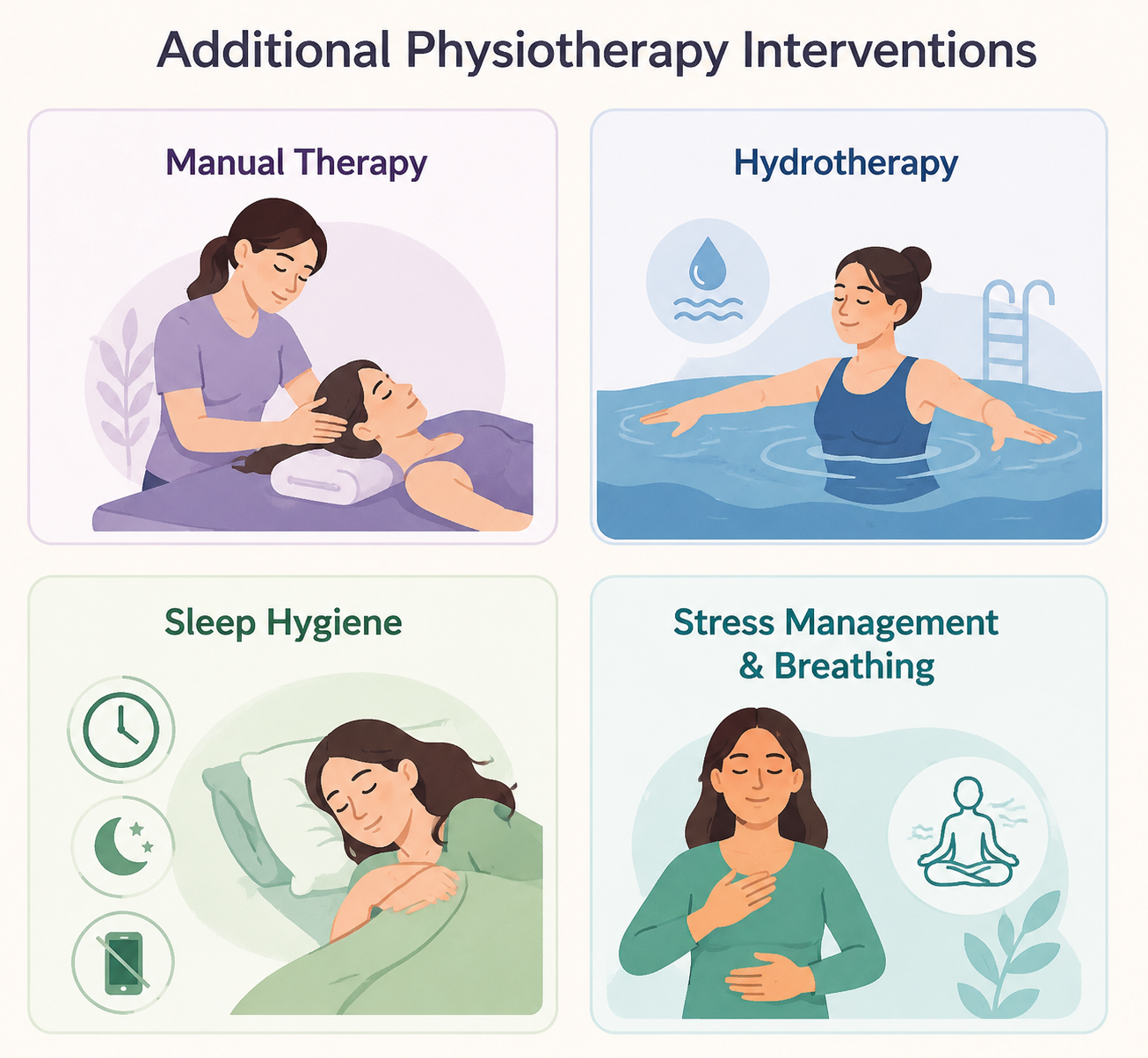
Additional Physiotherapy Interventions
Manual therapy. Gentle soft tissue techniques, myofascial release, and craniosacral
approaches can provide temporary pain relief and improve tissue extensibility in
fibromyalgia patients. We are careful to use manual therapy as an adjunct to active
rehabilitation rather than a substitute for it — because passive treatment alone does not
address the central sensitisation that drives the condition.
Hydrotherapy. Aquatic exercise is particularly well-suited to fibromyalgia — the warmth of
the water reduces muscle tension and pain sensitivity, the buoyancy reduces the effort
required for movement, and the aquatic environment provides a gentler entry point to
exercise for patients who find land-based activity too provocative.
Sleep hygiene guidance. Given the central role of sleep disturbance in maintaining
fibromyalgia symptoms, specific guidance on sleep hygiene — sleep timing consistency,
sleep environment, caffeine and screen use, relaxation techniques — is an important
component of our management approach.
Stress management and breathing. Psychological stress is a potent amplifier of
fibromyalgia pain, and many patients have significant anxiety or depression as co
morbidities. We incorporate breathing retraining and relaxation techniques into our
programme and facilitate referral to psychological services where appropriate.
What Patients Can Expect
Recovery from fibromyalgia is not linear, and it is not fast. Patients who begin our
programme with realistic expectations — that improvement happens gradually, that there
will be good weeks and difficult weeks, and that the direction of travel over months is what
matters rather than the experience of any individual day — achieve the best outcomes.
With consistent engagement over three to six months, most patients experience meaningful
reductions in pain intensity, improved sleep quality, greater functional capacity, and a
significantly improved sense of control over their condition. Many describe the experience
of physiotherapy-guided rehabilitation as the first time they have felt genuinely better — not
just temporarily medicated — since their symptoms began.
That transformation is real. And it is available to every fibromyalgia patient in Abu Dhabi who
is willing to engage with the process.
Book your fibromyalgia physiotherapy assessment at Health & Style Medical Centre, Abu Dhabi.

- Tags:
- Fibromyalgia
- physiotherapy