

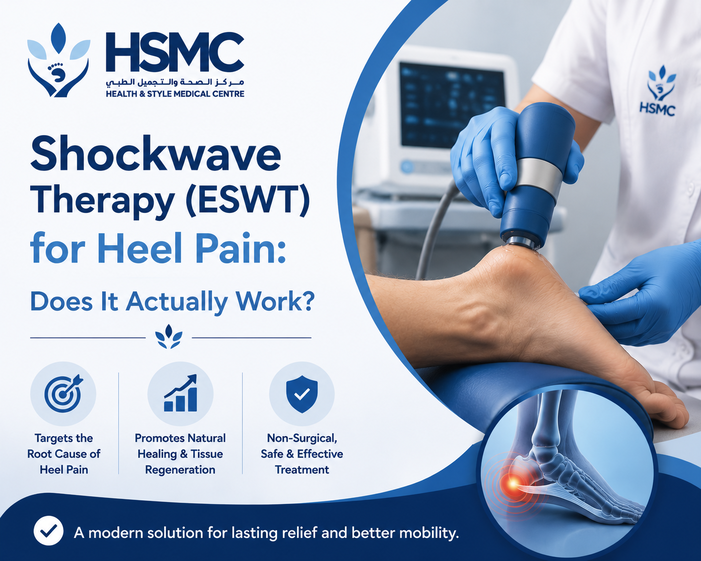
If you’ve had heel pain for months and stretching, insoles, and rest haven’t fixed it, your podiatrist
may recommend extracorporeal shockwave therapy — ESWT. It sounds dramatic, but it’s a non
invasive, evidence-backed treatment that has become a first-line option for chronic heel and tendon
pain worldwide. Here’s an honest look at how it works and what you can expect.
What Is ESWT?
Extracorporeal shockwave therapy delivers acoustic pressure waves through the skin into injured
tissue. No needles, no incisions, no anaesthesia — a handheld applicator transmits controlled pulses
directly to the painful area over a few minutes.
The key insight behind ESWT: chronic conditions like plantar fasciitis and Achilles tendinopathy
aren’t ongoing inflammation — they’re failed healing. The tissue has become degenerative and
metabolically “stuck.” Shockwaves restart the healing process by:
- Stimulating blood vessel formation and circulation in the damaged tissue
- Triggering the release of growth factors that drive tissue repair
- Stimulating collagen production — the building block of fascia and tendon
- Reducing pain signalling through effects on local nerve endings
- Breaking down calcific deposits in tendons
What Conditions Does It Treat?
ESWT has its strongest evidence in:
- Chronic plantar fasciitis — the flagship indication, with multiple randomized trials and
meta-analyses supporting meaningful pain reduction in cases lasting over 3–6 months - Achilles tendinopathy — both mid-tendon and insertional
- Calcific tendinopathy
- Other chronic tendon problems (gluteal, patellar) in wider musculoskeletal practice
It is specifically a treatment for chronic cases. Recent-onset heel pain usually responds to standard
care first — ESWT enters the picture when pain persists despite 3+ months of conservative
treatment
What Does the Evidence Say?
For chronic plantar fasciitis, systematic reviews consistently show ESWT outperforms placebo for
pain and function, with success rates commonly reported in the range of 60–80% — comparable to
or better than corticosteroid injection over the medium term, without injection risks. Results build
over weeks as tissue actually heals, rather than delivering the instant-but-temporary relief of an
injection. That trade-off — slower but more durable — is exactly what most chronic sufferers need.
What a Treatment Course Looks Like
- Assessment — your podiatrist confirms the diagnosis and that ESWT is appropriate
- Sessions — typically 3–6 sessions, one week apart, each lasting 15–20 minutes with the
shockwave application itself taking just a few minutes - Sensation — treatment is uncomfortable but tolerable; intensity is adjusted to your comfort
and often becomes easier each session - Aftercare — walk out and resume normal activities immediately; avoid intense impact for
48 hours after each session; anti-inflammatory medication is usually avoided during the
course, as inflammation is part of the healing being stimulated
When Will I Feel Better?
Some patients notice improvement within a couple of sessions, but the real gains typically appear 6–12 weeks after completing the course, as tissue regeneration progresses. Pairing ESWT with a
loading exercise program and addressing footwear/orthotic factors produces the best and most
lasting results — the shockwaves restart healing; the mechanics keep it from failing again.
Who Shouldn’t Have ESWT?
ESWT is avoided during pregnancy, over infections or tumours, in patients with certain blood
clotting disorders or on anticoagulants (case-by-case), and directly over growth plates in children.
Your podiatrist screens for these at assessment.
Frequently Asked Questions
Does shockwave therapy hurt?
How many sessions will I need?
Is there downtime?
Is it better than a cortisone injection?
Is ESWT covered by insurance in the UAE?

- Tags:
- foot care
- Plantar fasciitis