

Did you know that diabetes can affect your eyesight even before you notice any changes in your vision?
Many people associate diabetes with high blood sugar, but its effects go far beyond that. Over time, uncontrolled blood sugar levels can damage the tiny blood vessels in the retina, the light-sensitive layer at the back of your eye. This condition is known as diabetic retinopathy, one of the leading causes of vision impairment among people living with diabetes.
What makes this condition particularly concerning is that it can develop silently. You may have diabetic retinopathy without experiencing pain, blurred vision, or any noticeable symptoms during its early stages.
The good news is that early detection, proper diabetes management, and regular diabetic eye examinations can help protect your eyesight and reduce the risk of serious complications.
In this article, we explore how diabetes affects your eyes, seven warning signs to watch for, and why regular eye examinations are essential.
What Is Diabetic Retinopathy?
Diabetic retinopathy is an eye complication caused by prolonged high blood sugar levels that damage the small blood vessels in the retina.
The retina plays an essential role in vision. It receives light and sends visual signals to the brain, allowing you to see clearly.
When blood sugar levels remain high over time, the blood vessels supplying the retina can become damaged. They may leak fluid or blood, become blocked, or develop abnormal new blood vessels.
As the condition progresses, it can affect your ability to see clearly and, in severe cases, lead to permanent vision loss.
Important: Anyone with Type 1 or Type 2 diabetes can develop diabetic retinopathy. The risk generally increases the longer a person has diabetes and when blood sugar levels remain poorly controlled.
How Does High Blood Sugar Damage Your Eyes?
Your eyes contain a network of tiny blood vessels that supply oxygen and nutrients to the retina.
When blood glucose levels remain elevated for extended periods, these delicate blood vessels can become weakened and damaged.
Here is how the process happens:
- Damage to blood vessels: High blood sugar weakens the walls of the retinal blood vessels.
- Fluid leakage: Damaged vessels may leak blood or fluid into the retina.
- Reduced blood supply: Some blood vessels may become blocked, limiting oxygen supply to retinal tissue.
- Abnormal blood vessel growth: In advanced cases, the retina may develop new, fragile blood vessels that can bleed easily.
- Vision complications: Bleeding, swelling, and scar tissue can interfere with normal vision and potentially cause permanent damage.
One of the most important things to understand is that retinal damage can begin long before you notice changes in your eyesight.
7 Warning Signs of Diabetic Retinopathy You Should Never Ignore
Diabetic retinopathy may not cause noticeable symptoms in its early stages. However, as the condition progresses, you may experience changes in your vision.
Watch out for these seven warning signs:
1. Blurred or Distorted Vision
Are you finding it difficult to see clearly, even when wearing your glasses?
Blurred vision can occur when damaged retinal blood vessels leak fluid, causing swelling in the macula (the central part of the retina responsible for detailed vision).
You may notice:
- Difficulty reading small text.
- Blurred vision when looking at objects.
- Difficulty focusing on nearby or distant objects.
- Vision that changes throughout the day.
Persistent or sudden blurred vision should never be ignored, especially if you have diabetes.
2. Dark Spots or Floaters in Your Vision
Do you sometimes notice small dark spots, floating shapes, or thread-like shadows moving across your field of vision?
These are known as floaters.
In people with diabetic retinopathy, floaters may develop when damaged blood vessels bleed into the vitreous, the gel-like substance inside the eye.
You may notice:
- Small dark dots.
- Floating lines or cobweb-like shapes.
- Shadows that move when you move your eyes.
- Sudden increases in the number of floaters.
A sudden increase in floaters, particularly with flashes of light or a shadow in your vision, requires urgent eye assessment.
3. Difficulty Seeing at Night
Have you noticed that driving at night or seeing in dimly lit environments has become more difficult?
Changes in retinal function can affect your ability to see clearly in different lighting conditions.
You may experience:
- Difficulty adjusting to darkness.
- Reduced visibility in low-light environments.
- Trouble recognising objects at night.
- Increased difficulty driving after sunset.
Although night vision problems can have several causes, people with diabetes should have new or worsening symptoms evaluated.
4. Dark or Empty Areas in Your Field of Vision
Diabetic retinopathy can affect different areas of the retina, leading to missing or dark patches in your vision.
You might notice:
- Dark spots that do not disappear.
- Missing areas when looking straight ahead.
- Difficulty seeing objects on one side.
- Shadows affecting part of your vision.
These changes may indicate significant retinal damage and should be assessed promptly.
5. Difficulty Reading or Recognising Faces
When diabetic retinopathy affects the macula, it can interfere with central vision.
This may make everyday activities more difficult, including:
- Reading books or mobile phone screens.
- Recognising people’s faces.
- Watching television.
- Seeing fine details clearly.
Macular swelling, known as diabetic macular edema, can develop at different stages of diabetic retinopathy and requires specialist assessment.
6. Sudden Changes in Vision
One of the more serious warning signs is a sudden change in your eyesight.
This may happen when fragile, abnormal blood vessels bleed into the vitreous.
Symptoms can include:
- Sudden blurred vision.
- A sudden appearance of dark spots.
- Hazy or cloudy vision.
- A significant reduction in vision in one eye.
Sudden vision loss or major changes in eyesight require immediate medical attention. Do not wait for a routine eye examination.
7. Partial or Complete Loss of Vision
In advanced diabetic retinopathy, abnormal blood vessels can cause scar tissue to develop.
This scar tissue may pull on the retina, potentially causing retinal detachment. Severe bleeding and other complications can also result in significant vision loss.
Warning signs include:
- A dark curtain or shadow across your vision.
- Severe loss of vision.
- Difficulty seeing objects clearly.
- Partial or complete loss of sight.
These symptoms require emergency eye care.
What Are the Stages of Diabetic Retinopathy?
Diabetic retinopathy generally develops in two main stages.
1. Non-Proliferative Diabetic Retinopathy (NPDR)
This is the early stage of diabetic retinopathy.
During this stage, the small blood vessels in the retina begin to weaken and develop tiny bulges called microaneurysms. These blood vessels may leak fluid or small amounts of blood into the retina.
As the condition progresses, you may develop:
- Swelling in the retina.
- Small retinal haemorrhages.
- Blocked blood vessels.
- Changes in central vision if the macula is affected.
Many people experience no noticeable symptoms during this stage, which makes regular eye examinations essential.
2. Proliferative Diabetic Retinopathy (PDR)
This is the advanced stage of the condition.
When parts of the retina do not receive enough oxygen, the eye may respond by developing abnormal new blood vessels. Unfortunately, these vessels are fragile and can bleed easily.
Possible complications include:
- Bleeding inside the eye (vitreous haemorrhage).
- Scar tissue formation.
- Retinal detachment.
- Severe and potentially permanent vision loss.
Early diagnosis and timely treatment can help reduce the risk of these complications. National Eye Institute+2
Can Diabetic Retinopathy Cause Permanent Vision Loss?
Yes. If diabetic retinopathy is left untreated, it can cause severe and sometimes permanent vision loss.
There are several ways this can happen:
Diabetic Macular Edema: Fluid leaks into the macula, causing swelling and affecting central vision. This can make reading, recognising faces, and seeing fine details difficult.
Vitreous Haemorrhage: Fragile abnormal blood vessels bleed into the vitreous, causing dark spots, shadows, or significant vision impairment.
Retinal Detachment: Scar tissue can pull the retina away from its normal position, potentially resulting in severe vision loss.
The important thing to remember is that vision loss is not inevitable. Detecting diabetic retinopathy early and receiving appropriate treatment can significantly reduce the risk of blindness. National Eye Institute+2
Why Are Regular Diabetic Eye Examinations Important?
One of the biggest challenges with diabetic retinopathy is that it can develop without noticeable symptoms.
You might feel that your eyesight is perfectly normal while changes are already occurring inside your eyes.
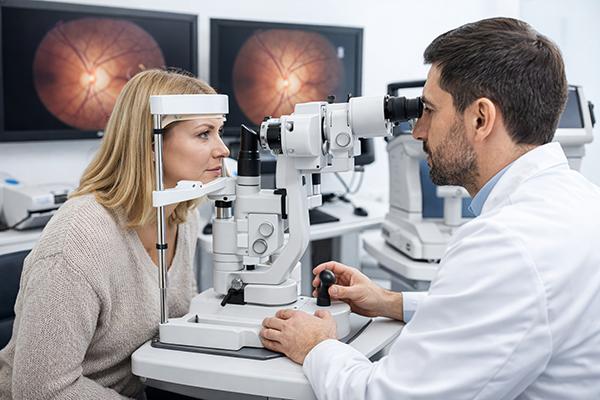
A comprehensive diabetic eye examination allows an eye care professional to examine the retina and identify potential problems before they affect your vision.
What Happens During a Diabetic Eye Examination?
A diabetic eye examination may include:
1. Visual Acuity Test
Checks how clearly you can see at different distances.
2. Dilated Eye Examination
Special eye drops are used to widen your pupils, allowing the eye specialist to examine the retina and its blood vessels.
3. Retinal Photography
Images of the back of your eyes help identify signs of retinal damage.
4. Optical Coherence Tomography (OCT)
When indicated, this non-invasive imaging test provides detailed cross-sectional images of the retina and helps identify swelling or fluid accumulation.
Your ophthalmologist will determine which examinations are appropriate based on your symptoms and medical history.
How Often Should People With Diabetes Have an Eye Examination?
The recommended screening schedule depends on the type of diabetes and individual risk factors.
| Diabetes type | Recommended initial eye examination |
|---|---|
| Type 1 diabetes | Within 5 years after diagnosis |
| Type 2 diabetes | At the time of diagnosis |
| Existing diabetic retinopathy | At least annually, or more frequently if advised |
Some people with consistently normal eye examinations and well-controlled diabetes may be eligible for screening every 1–2 years, depending on their eye specialist’s recommendation.
If you are pregnant or planning pregnancy and already have Type 1 or Type 2 diabetes, additional eye monitoring may be necessary. American Diabetes Association+2
How Can You Reduce Your Risk of Diabetic Retinopathy?
Although diabetes increases your risk of eye complications, there are practical steps you can take to protect your eyesight.
Here are six important preventive measures:
- Monitor your blood sugar: Keep your blood glucose within the target range recommended by your healthcare provider.
- Manage your blood pressure: High blood pressure can increase damage to the delicate blood vessels in your retina.
- Control your cholesterol: Maintaining healthy cholesterol levels supports overall blood vessel health.
- Follow a balanced diet: Choose nutritious foods that support healthy blood sugar management.
- Stay physically active: Regular physical activity, as advised by your healthcare provider, can support diabetes management.
- Schedule regular eye examinations: Do not wait for blurred vision or other symptoms before booking an appointment.
Remember, maintaining good blood sugar control can help prevent or slow the progression of diabetic retinopathy, but it does not replace regular eye examinations.
Can Diabetic Retinopathy Be Treated?
Yes. The treatment depends on the stage of diabetic retinopathy, the extent of retinal damage, and whether your vision is affected.
Available treatment options may include:
- Anti-VEGF injections: Medication injected into the eye to reduce abnormal blood vessel growth and retinal swelling.
- Laser treatment: Laser therapy can help reduce the risk of vision loss by treating abnormal retinal blood vessels or areas of retinal damage.
- Vitrectomy surgery: A surgical procedure that may be recommended to remove blood from the vitreous or address complications such as tractional retinal detachment.
Not everyone with diabetic retinopathy needs immediate treatment. Some people require regular monitoring, while others may need specialist intervention.
An ophthalmologist will recommend the most appropriate treatment based on your condition. National Eye Institute+2
Frequently Asked Questions (FAQs)
Frequently Asked Questions (FAQs)
1. Can diabetes cause blindness?
2. Can diabetic retinopathy develop without symptoms?
3. Does diabetic retinopathy affect both eyes?
4. Can diabetic retinopathy be reversed?
5. What is the difference between diabetic retinopathy and diabetic macular edema?
6. Should I have an eye examination if I have diabetes but no vision problems?
Protect Your Vision Before It’s Too Late!
Diabetes doesn’t just affect your blood sugar; it can also affect your eyesight without warning.
Blurred vision, floating spots, and dark areas in your field of vision should never be ignored. However, remember that the absence of symptoms does not mean your eyes are free from diabetic complications.
Early detection is your best defence against diabetes-related vision loss.
At HSMC – Health & Style Medical Centre, we encourage people living with diabetes to prioritise regular eye examinations and take proactive steps towards protecting their vision.
Take Care of Your Eyes. Protect Your Vision.
Don’t wait for vision changes. Schedule your eye consultation today.
HSMC – Health & Style Medical Centre

Aminah Rafaqat
- Tags:
- Diabetes